

Queen Elizabeth National Park
Queen Elizabeth National Park is Uganda’s most popular and most visited safari destination, drawing thousands of wildlife enthusiasts, nature lovers, and adventure travellers from across the globe every year. Established in 1952 and gazetted as a UNESCO Biosphere Reserve in 1979, the park spans an impressive 1,978 square kilometres across the districts of Kasese, Kamwenge, Rubirizi, and Rukungiri in western Uganda.
The park straddles the equator and sits at the edge of the Albertine Rift Valley, one of Africa’s most biodiverse regions. It is bordered to the west by the Democratic Republic of Congo and to the north by the Rwenzori Mountains, whose perpetually snow-capped peaks form a dramatic backdrop visible on clear mornings. Two remarkable lakes — Lake Edward and Lake George — are connected within the park by the Kazinga Channel, a 32-kilometre natural waterway that ranks among Africa’s finest wildlife corridors.
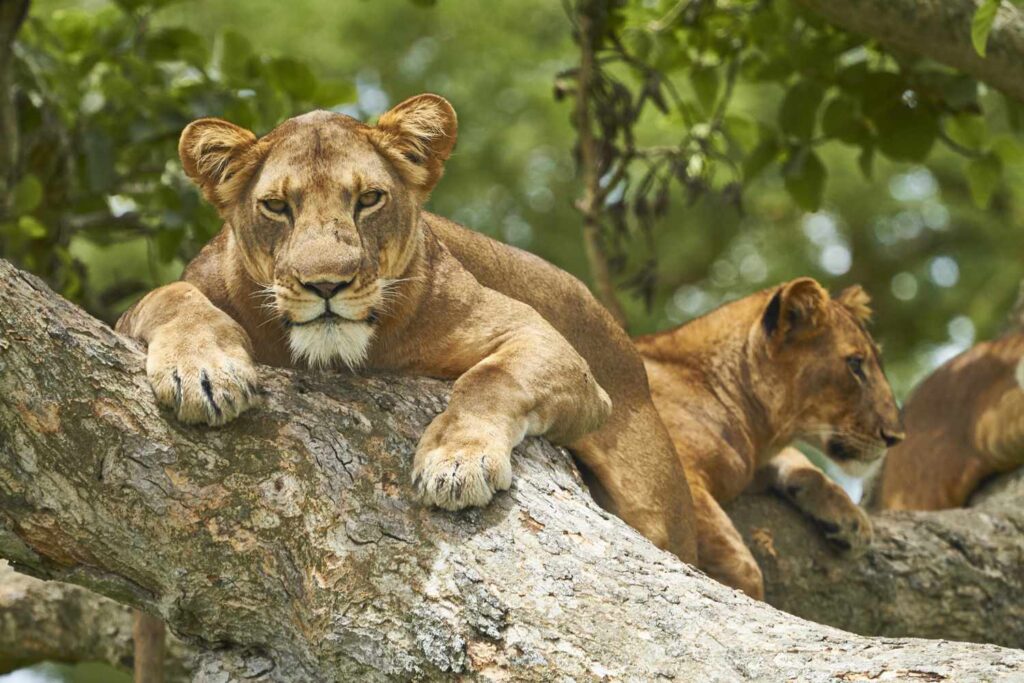
Queen Elizabeth National Park is celebrated for its exceptional biodiversity. It is home to over 95 mammal species, more than 600 bird species, and a remarkable variety of reptiles and amphibians. The park is one of only a handful of places in Africa where visitors can observe lions that have learned to climb trees — a behaviour that has become one of Uganda’s most iconic wildlife spectacles. The Ishasha sector, in the park’s southern reaches, is the best place to find these extraordinary tree-climbing lions lounging in the giant fig trees.
Beyond wildlife, Queen Elizabeth National Park offers a mosaic of landscapes that set it apart from most East African parks. Savannah grasslands, tropical rainforests, wetlands, crater lakes, and volcanic features all exist within its boundaries, making every drive a journey through a different world. The Kyambura Gorge — also known as the Valley of Apes — shelters habituated chimpanzee communities and is one of the most dramatic gorge forests in East Africa.
Whether you are embarking on a classic game drive across the Kasenyi Plains, a boat cruise along the Kazinga Channel, a chimpanzee trekking expedition in Kyambura Gorge, or a birdwatching session around the crater lakes, Queen Elizabeth National Park promises experiences that will stay with you for a lifetime.
Location & How to Get to Queen Elizabeth National Park
Geographic Position
Queen Elizabeth National Park is located in western Uganda, approximately 400 kilometres (about 6-7 hours by road) from Kampala, Uganda’s capital city. The park lies within the Western Rift Valley and is bounded by the Rwenzori Mountains to the north, the DRC border to the west, Lake George to the northeast, and Lake Edward to the southwest.
The park headquarters are located at Mweya Peninsula, a beautiful promontory jutting into the Kazinga Channel. The Mweya area is the main hub for most visitors and is where the Uganda Wildlife Authority (UWA) offices, Mweya Safari Lodge, and several other accommodation facilities are found.
Distance from Major Cities
- Kampala to Queen Elizabeth National Park: approximately 400-420 km (6-7 hours drive)
- Entebbe to Queen Elizabeth National Park: approximately 390-410 km (6-7 hours drive)
- Fort Portal to Queen Elizabeth National Park: approximately 60 km (1-1.5 hours drive)
- Kasese town to Mweya: approximately 40 km (45 minutes drive)
- Bwindi Impenetrable Forest to Ishasha sector: approximately 80 km (2 hours drive)
- Kibale Forest National Park to Mweya: approximately 100 km (2-2.5 hours drive)
Main Entry Gates
The park has several entry points depending on which sector you are visiting:
- Katunguru Gate — the main northern gate, accessed from Kasese via the Kasese-Mbarara highway
- Mweya Gate — the central gate near park headquarters
- Ishasha Gate — the southern gate for tree-climbing lion territory, accessed from Kihihi or via Bwindi
- Kyambura Gate — for the Kyambura sector and gorge chimpanzee trekking
Best Time to Visit Queen Elizabeth National Park
Dry Season (Best for Wildlife Viewing)
The best time to visit Queen Elizabeth National Park is during the two dry seasons: June to September (the main dry season) and December to February (a shorter dry season). During these months, vegetation is thinner, animals congregate around water sources making them easier to spot, and the roads — especially the murram tracks across the Kasenyi Plains — are more passable.
June to September is widely regarded as the peak safari season in Uganda. The weather is warm and mostly sunny, the Kazinga Channel boat cruises are especially rewarding as hippos, crocodiles, and water birds concentrate on the exposed banks, and game viewing on the savannah is at its finest.
Wet Season (Lush & Birding-Friendly)
The park receives two rainy seasons: March to May (long rains) and October to November (short rains). While wildlife can be harder to spot in the thicker vegetation and roads become muddy and challenging, the wet season has its own rewards. Migratory birds arrive in large numbers, the landscapes turn brilliantly green, and the park is significantly less crowded — with lower accommodation rates to match.
Birders often prefer the wet season months of April, October, and November when Palaearctic migrants are present and the wetlands teem with activity. If you plan to self-drive during the rains, a 4WD with high clearance is essential.
Month-by-Month Quick Reference
- January-February: Dry, excellent game viewing, good boat cruises
- March-May: Long rains, lush scenery, great birding, challenging roads
- June-July: Peak dry season, best game viewing, highest visitor numbers
- August-September: Excellent conditions, big game concentrations
- October-November: Short rains, birding peak, fewer tourists
- December: Short dry spell begins, good all-round conditions
Wildlife & Biodiversity
The Big Mammals
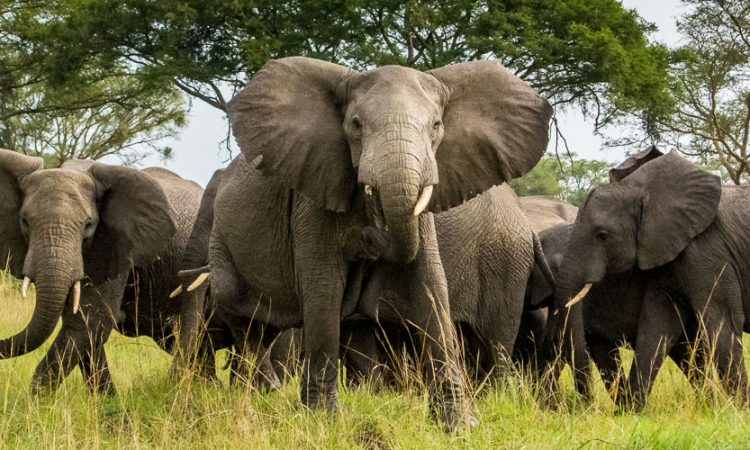
Queen Elizabeth National Park hosts an outstanding array of large mammals. African elephants are plentiful and regularly seen on the Kasenyi Plains and around Mweya. The park supports one of Uganda’s largest buffalo populations, and enormous herds can be spotted grazing on the open grasslands at dawn and dusk.
African lions are present throughout the park. While you may encounter prides on the Kasenyi Plains in the northern sector, it is in the Ishasha sector that you will find the celebrated tree-climbing lions. These remarkable cats have adapted to climbing the giant fig trees (Ficus natalensis) in Ishasha, a behaviour rarely observed elsewhere in Africa and believed to be an adaptation to avoid insects and to gain a better vantage point. Watching a pride of lions reclining in the branches of a fig tree against the backdrop of the Congo basin forest is an unforgettable sight.
Hippos are arguably the star of the Kazinga Channel. The channel holds one of the highest concentrations of hippos in Africa, and boat cruises along its 32-kilometre length offer extraordinary close-up encounters with these massive animals. Nile crocodiles are equally abundant, basking on the mudflats and sandbars throughout the channel.
Primates
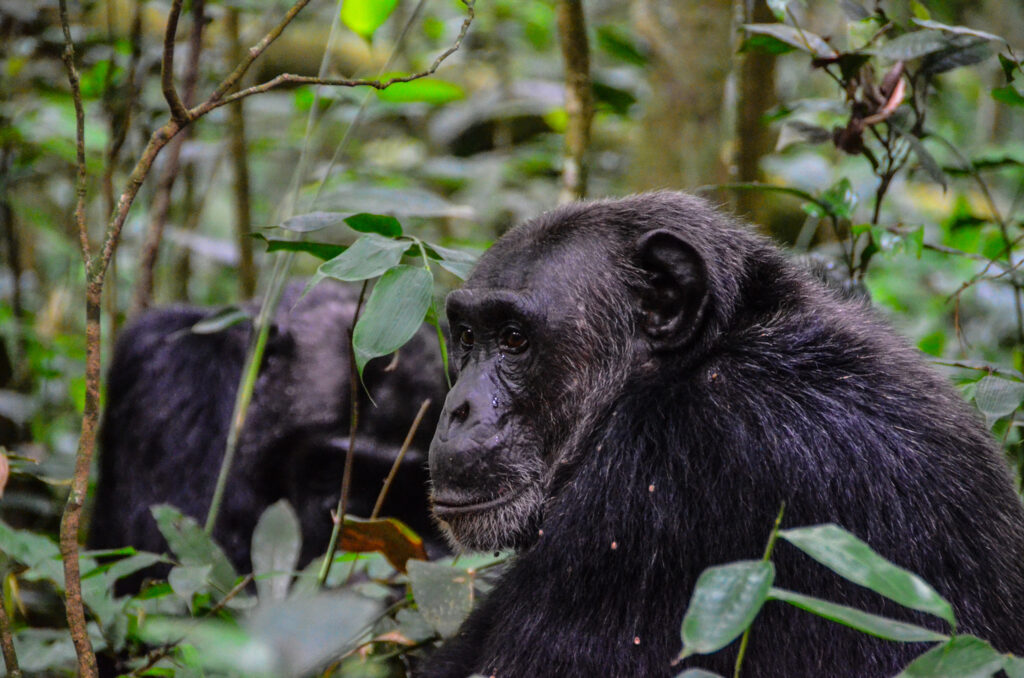
Queen Elizabeth National Park is an excellent destination for primate enthusiasts. The Kyambura Gorge is home to a habituated community of common chimpanzees (Pan troglodytes) and chimpanzee trekking here is a memorable experience. The gorge itself — a dramatic scar in the landscape, some 100 metres deep and draped in lush forest — is a natural wonder in its own right.
Olive baboons and Uganda kob (the national animal of Uganda) are extremely common and virtually guaranteed sightings throughout the park. Vervet monkeys, red-tailed monkeys, and black-and-white colobus monkeys are frequently spotted in forested areas.
Bird Life
With over 600 recorded bird species, Queen Elizabeth National Park is one of East Africa’s premier birding destinations. The extraordinary diversity arises from the park’s remarkable range of habitats — open savannahs, dense forests, wetlands, crater lakes, and the Kazinga Channel all attract different communities of birds.
Some of the most sought-after species include the African skimmer, pink-backed pelican, African fish eagle, Verreaux’s eagle owl, martial eagle, African pygmy kingfisher, Papyrus gonolek, and the rare shoebill stork (best sought in the wetlands near the channel and in Ishasha). The Mweya Peninsula itself is excellent for birding with bee-eaters, kingfishers, and weavers in abundance.
Other Notable Wildlife
- Leopard — secretive but present, best spotted on night game drives in Kasenyi
- Spotted hyena — common, often seen at dusk around Kasenyi Plains
- Side-striped jackal — regularly encountered in open grasslands
- African civet and genet — spotted on night drives
- Nile monitor lizard — abundant along the Kazinga Channel
- Hippopotamus — 3,000+ individuals in Kazinga Channel alone
Top Safari Activities & Experiences
1. Game Drives
Game drives are the cornerstone of any Queen Elizabeth National Park safari. The Kasenyi Plains in the northern sector are the primary game drive area and offer the best opportunities to spot lions, elephants, buffaloes, Uganda kobs, warthogs, and topis. Early morning and late afternoon drives are most productive, as animals are most active during the cooler hours.
The Ishasha sector in the south is famous for its tree-climbing lions and is a must-visit for any serious safari traveller. Game drives here explore the fig tree woodlands and open grasslands where the lions congregate. Giant forest hogs, waterbucks, and topis are also regularly seen.
2. Kazinga Channel Boat Cruise
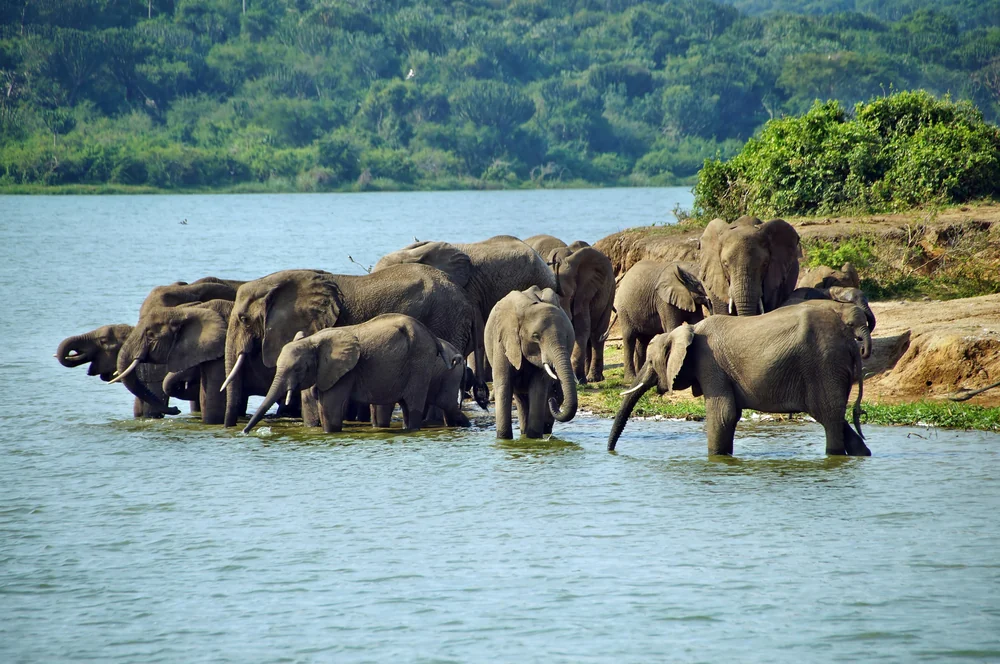
The Kazinga Channel boat cruise is arguably the single most popular activity in Queen Elizabeth National Park and should not be missed. The two-hour cruise departs from Mweya jetty and travels along the channel linking Lake George and Lake Edward. The sheer density of wildlife along the banks is extraordinary — you will glide past groups of 50 or more hippos, Nile crocodiles sunning on the mudflats, and hundreds of water birds including cormorants, pelicans, kingfishers, herons, and skimmers. Elephants and buffaloes come down to drink at the water’s edge, and the channel offers superb close-up views that are hard to replicate on land.
3. Chimpanzee Trekking in Kyambura Gorge
Kyambura Gorge, located on the eastern edge of the park, offers a unique chimpanzee trekking experience within a dramatic ancient gorge. The gorge shelters a habituated community of around 16 chimpanzees and descending into the forest-filled valley is an experience unlike any other in Uganda. Unlike the Kibale Forest experience, the Kyambura trek involves a memorable descent into the gorge itself before searching for the chimps in the gallery forest below.
4. Crater Lakes Drive & Hike
The Bunyaruguru Crater Lake Field in the northern sector of the park contains some of Uganda’s most beautiful crater lakes. The drive through the craters offers spectacular scenery and excellent birding opportunities. Many of the crater lakes support flamingo populations, and the views from the crater rims across the Albertine Rift are breathtaking.
5. Birdwatching
Queen Elizabeth National Park’s 600+ bird species make it a world-class birding destination. The Mweya Peninsula, Kazinga Channel, Maramagambo Forest, Kyambura Gorge, Ishasha River, and the crater lake area all offer excellent and very different birding habitats. A specialist birding guide can help you tick off many of Uganda’s most wanted species within just a few days.
6. Sport Fishing
Sport fishing is permitted on Lake George and parts of the Kazinga Channel. Nile perch and tilapia are the main target species. Fishing permits can be arranged through the Uganda Wildlife Authority at Mweya.
7. Nature Walks & Community Visits
Guided nature walks are available in several areas of the park including around Mweya Peninsula, Maramagambo Forest, and near the crater lakes. These walks bring you closer to the smaller details of the bush — birds, plants, insects, and tracks — that are often missed on a vehicle game drive. Nearby community experiences offer cultural insights and direct community tourism benefits.
Car Rental to Queen Elizabeth National Park
Why Rent a Car for Queen Elizabeth National Park?
Renting a car to visit Queen Elizabeth National Park offers unmatched flexibility, freedom, and value — especially for independent travellers, families, and small groups who want to explore at their own pace. Unlike fixed-schedule guided tours, a self-drive or hired-vehicle arrangement allows you to extend game drives when wildlife is active, revisit productive areas of the Kasenyi Plains multiple times, and move between the park’s different sectors — Mweya, Kasenyi, Kyambura, Ishasha, and the crater lakes — without depending on a third-party itinerary.
Car rental is also the most cost-effective way to reach and explore Queen Elizabeth National Park, particularly for groups of three or more travellers sharing a vehicle. When you factor in the savings compared to per-person lodge transfers and packaged tour costs, self-drive or driver-guided car hire becomes very competitive.
Best Car Types for Queen Elizabeth National Park
1. Toyota Land Cruiser (4WD) — Best Overall
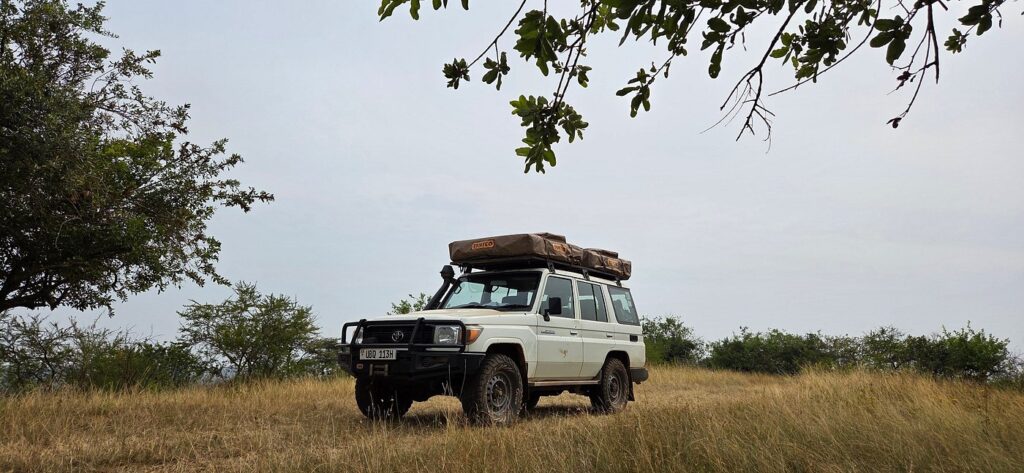
The Toyota Land Cruiser — in its various configurations (Land Cruiser 70 Series, Land Cruiser 100 Series, Land Cruiser V8, Land Cruiser Prado) — is the definitive safari vehicle for Queen Elizabeth National Park. The park’s roads, particularly in the Kasenyi Plains and Ishasha sector, can become extremely muddy and deeply rutted during the rainy season, and only a true 4WD with significant ground clearance can navigate them reliably. The Land Cruiser’s high seating position is ideal for game viewing, and pop-up roof hatches allow passengers to stand and photograph without obstruction.
- Best for: year-round use including wet season, rough tracks in Ishasha, and crossing seasonal streams
- Seating: typically 7-8 passengers
- Fuel type: diesel
- Daily hire rate: approximately USD 150-220 per day (self-drive) or USD 180-250 per day (with driver/guide)
2. Toyota Safari Land Cruiser with Pop-Up Roof
Many car hire companies offer Land Cruisers that have been custom-fitted with pop-up canvas roofs specifically for game viewing. These are the best vehicles for photography as they give passengers a 360-degree standing view without glass or frame obstructions. If you are serious about wildlife photography or simply want the most immersive game viewing experience, specifically request a vehicle with a pop-up roof.
3. Toyota Rav4 or Mitsubishi Pajero (4WD) — Budget Option
For travellers on a tighter budget who plan to visit mainly during the dry season, a Toyota Rav4 4WD or Mitsubishi Pajero offers a more affordable alternative. These vehicles are capable on most of the park’s dry season tracks but are not recommended for the Ishasha sector during rainy season or for seriously muddy conditions.
- Best for: dry season visits, Mweya and Kasenyi sectors on good-condition tracks
- Daily hire rate: approximately USD 80-130 per day
4. Toyota Hiace Minibus — Group Travel
For larger groups (8-14 people), a Toyota Hiace minibus with 4WD conversion offers the most economical per-person transport from Kampala or Entebbe to the park. While not ideal for deep bush driving, the Hiace is perfectly adequate for the drive to the park and for navigating the main tracks, especially in dry season.
Self-Drive vs. Driver-Guided Car Hire
Self-Drive Car Rental
Self-driving in Queen Elizabeth National Park is permitted and is a popular option for experienced 4WD drivers who are comfortable navigating unfamiliar tracks in a foreign country. Self-drive hire gives you maximum flexibility and privacy. You will need a valid international driving permit (IDP) or a Ugandan driving licence, and most reputable hire companies require a minimum age of 25 and a clean driving record.
Important considerations for self-drive visitors: the park’s internal tracks are not signposted comprehensively, and navigation apps like Google Maps do not always reflect track conditions or closures. Downloading an offline map and carrying a printed park map from the Uganda Wildlife Authority is advisable. Mobile data coverage is limited in many parts of the park.
Driver-Guide Car Hire
For most first-time visitors and those who want to maximise wildlife sightings, hiring a vehicle with an experienced driver-guide is strongly recommended. A knowledgeable driver-guide brings years of experience tracking animals, reading animal behaviour, knowing the best spots at different times of day, and navigating the tracks safely. Many guides are also trained naturalists with deep knowledge of the park’s birds, trees, and ecosystems.
The additional daily cost of a driver-guide (typically USD 30-50 on top of the vehicle hire) is widely considered excellent value for the quality and quantity of wildlife encounters it produces. Your driver-guide will also handle all logistics — fuel stops, entry permits, accommodation check-ins, and boat cruise bookings — freeing you to fully immerse in the experience.
Car Rental Rates for Queen Elizabeth National Park (2025 Guide)
The following are approximate guide rates. Final quotes depend on trip duration, season, specific vehicle model, driver/guide fees, and fuel costs:
- Toyota Land Cruiser 4WD (self-drive): USD 150-220/day
- Toyota Land Cruiser with pop-up roof + driver/guide: USD 200-280/day
- Toyota Rav4 4WD (self-drive): USD 80-110/day
- Toyota Prado 4WD + driver/guide: USD 180-250/day
- Toyota Hiace Minibus (self-drive): USD 100-150/day
- Toyota Hiace Minibus + driver: USD 130-180/day
- Driver/guide fee (additional): USD 30-50/day
- Fuel surcharge: budget approx. USD 60-80/day for a Land Cruiser
What to Check When Renting a Car
Before confirming any car hire, verify the following with the rental company:
- Vehicle age and service history — newer, well-maintained vehicles have fewer breakdowns
- Spare tyres — request a minimum of two spare tyres for a safari trip to a remote park
- Recovery kit — a high-lift jack, tow rope, and shovel should be in every safari vehicle
- Comprehensive insurance — confirm the policy covers off-road driving in national parks
- 24-hour breakdown support — confirm the company has a rescue protocol for breakdowns in the field
- Fuel policy — confirm whether vehicles are issued and returned full or on a consumption basis
- Cross-border permit — required if you plan to cross into Rwanda, Tanzania, or DRC
Fuel & Logistics Along the Route
The drive from Kampala to Queen Elizabeth National Park is approximately 400 km and takes 6-7 hours on well-maintained tarmac roads for most of the journey. The main route runs via Masaka and Mbarara before heading northwest to Kasese and the park.
Key fuel stations along the Kampala-Kasese route include Kampala (fill up here), Masaka, Mbarara, Bushenyi, and Kasese town. It is strongly advisable to fill your tank at Kasese before entering the park, as there are no fuel stations inside Queen Elizabeth National Park. Carry a 20-litre jerry can as an emergency reserve.
- Kampala (Entebbe) to Masaka: 136 km, good tarmac
- Masaka to Mbarara: 124 km, good tarmac
- Mbarara to Bushenyi/Ishaka junction: 60 km, good tarmac
- Bushenyi to Kasese: 60 km, mostly good tarmac with some rough sections
- Kasese to Mweya Park HQ: 40 km, tarmac then murram/dirt track
- Kasese to Ishasha Gate: approximately 110 km (via Kihihi), mix of tarmac and dirt
Combining Queen Elizabeth NP with Other Parks
Queen Elizabeth National Park’s central location in western Uganda makes it an ideal anchor for multi-park itineraries. Many travellers combine it with neighbouring parks for comprehensive Uganda safari experiences:
- Queen Elizabeth NP + Bwindi Impenetrable Forest: add 2-3 days for gorilla trekking (Ishasha sector provides a convenient southern route to Bwindi via Kihihi, approximately 3-4 hours)
- Queen Elizabeth NP + Kibale Forest: add 1-2 days for chimpanzee trekking in Kibale, located approximately 100 km north (via Fort Portal)
- Queen Elizabeth NP + Rwenzori Mountains: add 1-3 days for Rwenzori Mountain trekking (Kasese is the gateway)
- Complete western Uganda circuit: Kibale (chimps) to Queen Elizabeth (game drives + boat cruise) to Bwindi (gorilla trekking) to Lake Bunyonyi to Kampala: 10-14 days
Where to Stay in Queen Elizabeth National Park
Luxury & High-End Lodges
Mweya Safari Lodge is the flagship accommodation at Queen Elizabeth National Park, sitting on the Mweya Peninsula with commanding views over the Kazinga Channel and Lake Edward. The lodge offers classic-style rooms and cottages, a swimming pool, fine dining, and direct access to boat cruises and game drives. It is managed by the Mantis Collection and represents the peak of luxury accommodation within the park.
Kyambura Gorge Lodge sits on the edge of Kyambura Gorge and offers spectacular gorge views from its individually designed cottages. Its location is perfect for chimpanzee trekking, birdwatching, and community visits. The lodge has strong sustainability and community benefit credentials.
Mid-Range Lodges & Camps
Enganzi Game Lodge, Elephant Plains Lodge, and Pumba Safari Cottages offer comfortable mid-range accommodation at various locations around the park boundary. These lodges provide a good balance of comfort, location, and value, with swimming pools, restaurant facilities, and in-house guides.
Budget Accommodation
The Uganda Wildlife Authority operates bandas (self-catering cottages) and camping sites at Mweya, offering the most affordable accommodation option within the park. The UWA bandas are basic but functional and represent excellent value for independent travellers on a tighter budget. Camping within the park is a memorable experience — the Mweya campsite is unfenced, meaning wildlife can and does wander through at night.
Activity Fees (Additional)
- Kazinga Channel boat cruise (2 hours): USD 30 per person
- Chimpanzee trekking permit (Kyambura Gorge): USD 50 per person
- Guided nature walk: USD 10-20 per person
- Sport fishing permit: USD 50 per boat per day
- Vehicle entry fee: USD 30 per non-resident vehicle per day
Entry Requirements for Uganda
Most nationalities require a visa to enter Uganda. The East Africa Tourist Visa (USD 100) covers Uganda, Kenya, and Rwanda and can be purchased online at the Immigration Portal of Uganda before travel or on arrival at Entebbe International Airport.
All visitors must present a valid yellow fever vaccination certificate upon entry into Uganda — this is strictly enforced. Ensure your certificate is current (the yellow fever vaccine is now considered a lifetime vaccination).
Practical Travel Tips
Health & Safety
Malaria: Queen Elizabeth National Park is a malaria-endemic area. Take prescribed antimalarial medication starting before your trip, use DEET-based repellent, wear long sleeves and trousers at dusk and dawn, and sleep under a mosquito net.
Vaccinations: Ensure yellow fever vaccination is current (required for entry). Typhoid, hepatitis A, and tetanus vaccinations are recommended. Consult a travel health clinic at least 6 weeks before departure.
Water: Drink only bottled or purified water. Avoid tap water and ice at budget establishments.
Sun protection: The equatorial sun is intense. Use high-SPF sunscreen, wear a wide-brimmed hat, and carry sunglasses.
What to Pack
- Lightweight, neutral-coloured safari clothing (khaki, olive, brown, grey)
- A fleece or light jacket — mornings and evenings can be cool
- Good quality binoculars (8×42 or 10×42 recommended for birding)
- Camera with a telephoto lens (minimum 300mm recommended)
- Insect repellent (DEET 30-50%)
- Sunscreen (SPF 50+) and lip balm
- Comfortable walking shoes and waterproof footwear for wet season
- Torch/headlamp with spare batteries
- Power bank for charging devices in the field
Communication & Connectivity
Mobile phone coverage exists in many parts of Queen Elizabeth National Park, particularly around Mweya and Kasenyi, but is unreliable in remote areas including Ishasha. MTN Uganda and Airtel Uganda are the main providers with the best coverage. Purchase a local SIM card at Entebbe airport or in Kampala for affordable data and calls.
Currency & Payments
The Ugandan Shilling (UGX) is the local currency. US Dollars are widely accepted for major payments including accommodation, park fees, and car hire. ATMs are available in Kasese town and in Kampala and Mbarara, but not inside the park. Carry sufficient cash for the duration of your park visit. Credit card acceptance is limited to larger lodges.
Conservation & Community
Queen Elizabeth National Park faces several conservation challenges including human-wildlife conflict, poaching, habitat encroachment, and the impacts of a growing tourism industry. The Uganda Wildlife Authority, working alongside international conservation partners including the Wildlife Conservation Society (WCS) and the Albertine Rift Conservation Society, implements comprehensive wildlife monitoring, anti-poaching patrols, and community benefit programmes.
Revenue sharing from park fees directly benefits communities living around the park boundary. The Communal Land Associations (CLAs) around the park boundary work with UWA to reduce human-wildlife conflict and to give communities a tangible stake in conservation outcomes. When you visit Queen Elizabeth National Park, your entry fees and activity payments contribute directly to this vital work.
Conclusion
Queen Elizabeth National Park is undeniably one of Africa’s great safari destinations and Uganda’s crown jewel of wildlife conservation. Its extraordinary diversity — of landscapes, habitats, wildlife, and experiences — sets it apart from virtually any other park on the continent. From the tree-climbing lions of Ishasha and the chimpanzees of Kyambura Gorge to the hippo-laden waters of the Kazinga Channel and the birding riches of the crater lakes, the park offers something truly remarkable at every turn.
Whether you choose to arrive on a guided group tour, in a self-drive Land Cruiser, or with a hired driver-guide, the journey to Queen Elizabeth National Park is an adventure in itself, travelling through the beautiful landscapes of western Uganda. Plan your visit carefully, choose the right vehicle for the season, budget for the full range of park activities, and you will return home with memories that will last a lifetime.
Book your car hire early — particularly for the peak June-September season — to secure the best vehicles at the best rates and to ensure you have an experienced driver-guide who knows the park intimately. Queen Elizabeth National Park deserves more than a rushed overnight stop; allow a minimum of 3-4 nights to do justice to all it offers.