

Kibale National Park: Uganda’s Primate Capital
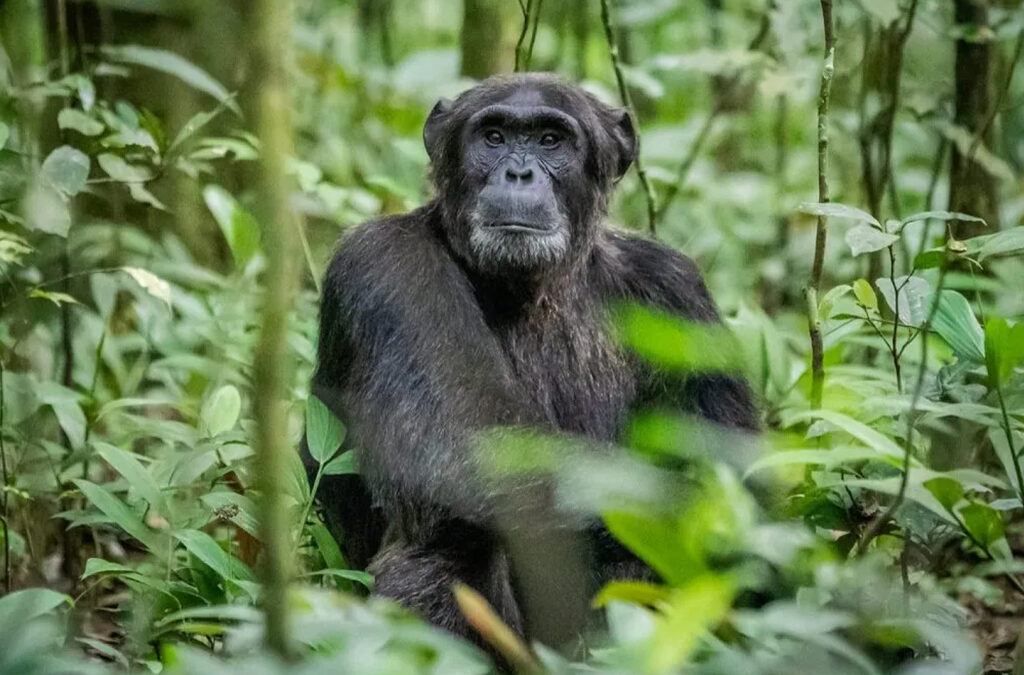
Kibale National Park is one of Africa’s most remarkable wildlife destinations — a dense, ancient rainforest in western Uganda that harbors the highest concentration of primates on the continent. Covering 795 square kilometers of tropical moist forest, this extraordinary ecosystem is home to 13 primate species, over 70 mammal species, and more than 375 bird species. At its heart lies a thriving community of roughly 1,500 chimpanzees, our closest living relatives, making Kibale the premier destination in the world for chimpanzee trekking.
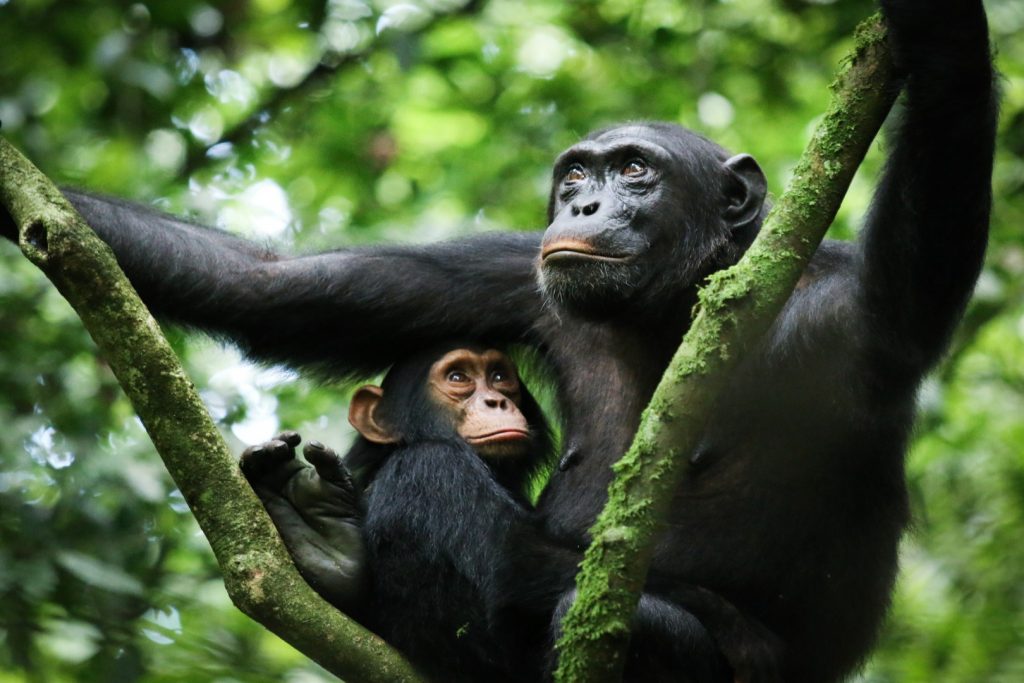
Gazetted as a national park in 1993 by the Government of Uganda, Kibale Forest is managed by the Uganda Wildlife Authority (UWA) and forms the northern anchor of the Greater Kibale Conservation Area — a network of protected land that stretches south through the Kibale–Kasese corridor all the way to Queen Elizabeth National Park. This biological corridor allows elephants, leopards, and other large mammals to move between the two parks, creating a wildlife mega-habitat of outstanding ecological importance.
For travelers, Kibale offers an experience that few places on earth can match: sitting beneath towering African mahogany trees, watching a troop of wild chimpanzees swing overhead, vocalize, forage and play in their natural habitat. Combined with the nearby Bigodi Wetland Sanctuary, scenic crater lakes, lush tea plantations, and the culturally rich Batooro kingdom, Kibale National Park is a destination that rewards every kind of traveler — from the serious wildlife enthusiast to the first-time safari-goer.
Location and How to Get to Kibale National Park
Kibale National Park lies in the foothills of the Rwenzori Mountains in western Uganda, stretching across parts of Kabarole and Kamwenge Districts. The park headquarters and main tourism centre, Kanyanchu, sits approximately 36 kilometres south of Fort Portal town along the Fort Portal–Kamwenge Road. Kibale is roughly 350 kilometres west of Uganda’s capital, Kampala, and about 22 kilometres north of the Kyenjojo–Kamwenge junction.
The park is relatively well connected by tarmac road for most of the journey from Kampala, making it accessible by private vehicle, hired car, or public bus. The last section from Fort Portal to Kanyanchu is on a murram (gravel) road that is generally passable in a standard saloon car during the dry season but requires a 4WD vehicle during heavy rains.
Distance from Major Ugandan Cities
| Route | Distance & Approximate Drive Time |
| Kampala to Kibale (Kanyanchu) | ~ 350 km (5–6 hours drive) |
| Entebbe to Kibale | ~ 380 km (5.5–6.5 hours drive) |
| Fort Portal to Kibale (Kanyanchu) | ~ 36 km (45 minutes drive) |
| Kasese to Kibale | ~ 85 km (1.5 hours drive) |
| Queen Elizabeth NP to Kibale | ~ 60 km via Kamwenge (1.5 hours) |
| Mbarara to Kibale | ~ 200 km (3.5 hours drive) |
| Bwindi Impenetrable NP to Kibale | ~ 200 km (4–5 hours drive) |
Road Routes from Kampala
Route 1: Northern Route via Mityana–Mubende–Fort Portal (Recommended)
This is the most popular and fastest route from Kampala to Kibale National Park. The road is predominantly tarmac and in good condition for most of the journey. From Kampala, take the Mityana Road heading west, passing through Mityana town, then continue to Mubende, Kyenjojo, and on to Fort Portal. From Fort Portal, follow the Fort Portal–Kamwenge Road south for 36 kilometres to reach Kanyanchu Tourism Centre. This route covers approximately 350 kilometres and takes 5 to 6 hours under normal traffic conditions.
Route 2: Southern Route via Mbarara–Kasese
Travelers arriving from Mbarara, Bwindi Impenetrable National Park, or Lake Mburo National Park can approach Kibale from the south. Take the Mbarara–Kasese highway northwest to Kasese, then follow the Kasese–Fort Portal road north. Turn south at Fort Portal onto the Kamwenge Road and proceed 36 kilometres to Kanyanchu. This route is ideal for those combining Kibale with a circuit of western Uganda’s parks.
Route 3: By Air to Kasese
Charter flights operate between Entebbe International Airport and Kasese Airstrip, the nearest landing point to Kibale. The flight takes approximately 1 hour and is followed by an 85-kilometre drive to Kanyanchu. Several Kampala-based tour operators arrange these charter transfers. Daily scheduled service may also be available through Aerolink Uganda depending on the season — confirm schedules with your operator before booking.
Car Rental to Kibale National Park
Renting a car is by far the most practical and liberating way to get to Kibale National Park and to explore the broader western Uganda safari circuit. Unlike a guided group tour, a self-drive or driver-guided car rental gives you full control over your timing, pace, and itinerary. You can stop at crater lakes along the way, make an unplanned detour to a tea plantation, depart at dawn for a primate walk, or extend your stay without being locked to a fixed group schedule.
Car hire in Uganda is available from operators based in Kampala and Entebbe, and in some cases from agencies with pickups directly at Fort Portal. Rates, vehicle types, and service quality vary considerably — the sections below guide you through everything you need to know to rent the right vehicle for the Kibale road.
Best Vehicle Types for Kibale National Park
The choice of vehicle depends on the time of year you are traveling, your budget, the number of people in your group, and whether you plan to extend your trip to other parks such as Queen Elizabeth, Bwindi, or Murchison Falls.
Toyota Land Cruiser (4WD) — Best Overall Choice
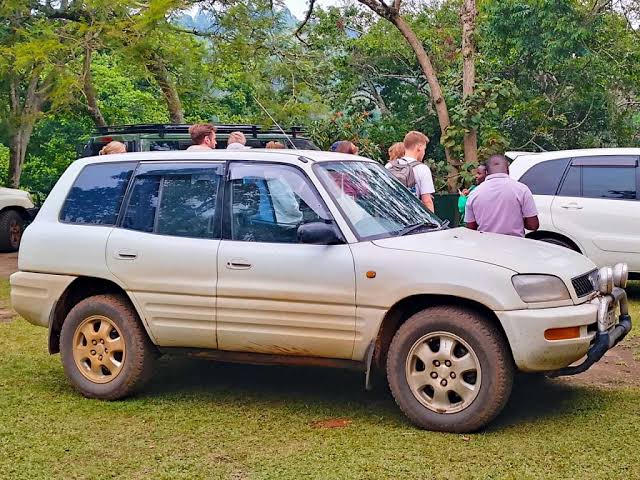
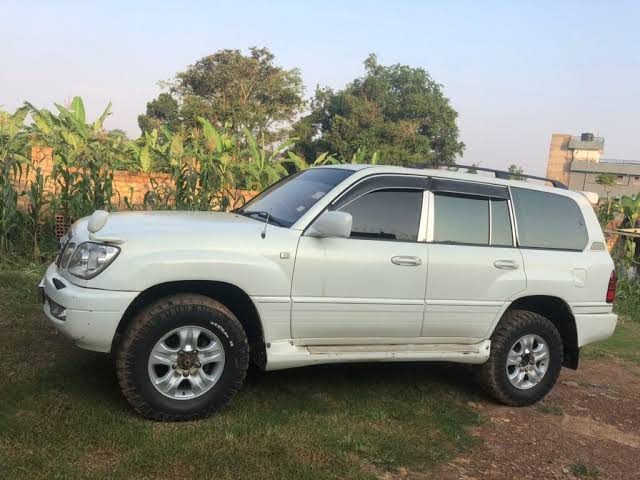
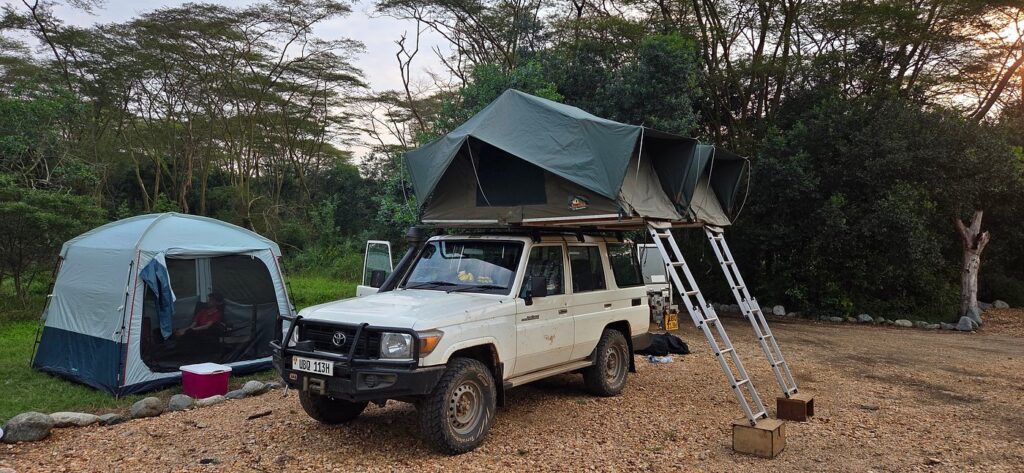
The Toyota Land Cruiser — particularly the Land Cruiser 70 Series, Land Cruiser 100 Series (Prado), and the Safari Pop-Top — is the gold standard for Uganda safari travel. Its high ground clearance handles the murram sections between Fort Portal and Kanyanchu with ease, its powerful engine manages Uganda’s hilly terrain, and in a pop-top safari version it provides an elevated platform for wildlife viewing. If you are traveling during the rainy season (March–May or October–November), a Land Cruiser 4WD is effectively non-negotiable for the last stretch to Kanyanchu. Daily hire rates typically range from USD 100 to USD 180 per day, depending on the age of the vehicle and whether a driver is included.
Toyota RAV4 and Rav 4WD — Mid-Range Option
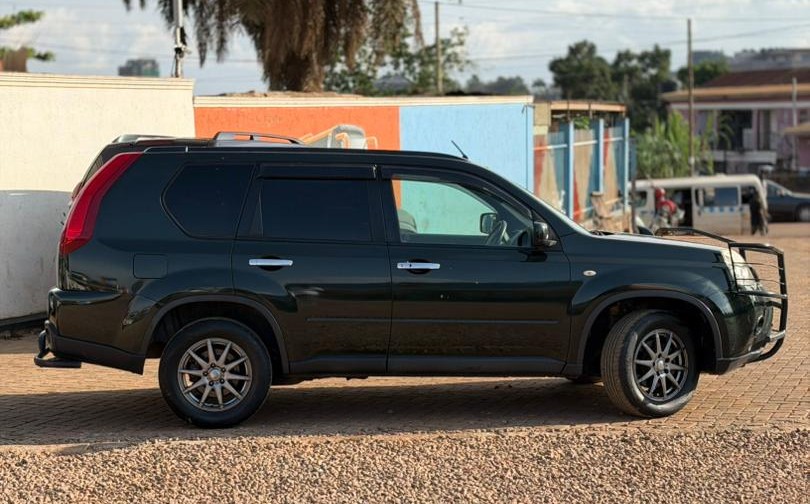
For travelers on a tighter budget who are visiting during the dry season (June–September or December–February), a Toyota RAV4 with four-wheel drive capability offers a reasonable compromise between cost and performance. The RAV4 handles the Fort Portal–Kanyanchu murram road adequately in dry conditions but can struggle in wet season mud. Daily hire rates range from USD 60 to USD 90 per day.
Toyota Hiace Minibus — Best for Groups
For families, groups of six or more, or combined birding and safari parties, the Toyota Hiace minibus with 4WD conversion is an excellent choice. It comfortably seats 7 to 8 passengers with luggage, air conditioning, and ample windows for wildlife viewing. It performs well on tarmac routes but is less suited to deeply rutted murram roads. Groups with heavy luggage should opt for a standard Land Cruiser or pair a saloon transfer with a 4WD for the last leg. Daily hire rates range from USD 90 to USD 140 per day.
Saloon Car — Dry Season Budget Option
Budget travelers visiting strictly in the dry season can reach Kanyanchu in a standard saloon car such as a Toyota Premio or Toyota Corolla on the Fort Portal–Kamwenge Road. However, this carries a real risk — an unexpected downpour can quickly render the murram sections impassable for a low-clearance vehicle. If you choose this option, monitor weather forecasts closely and confirm road conditions locally before departure. Daily hire rates range from USD 35 to USD 60 per day.
Self-Drive vs. Chauffeur-Driven Car Rental
Self-Drive: Renting a car without a driver is possible in Uganda for experienced drivers who are comfortable driving on the left side of the road, navigating unmarked junctions, and handling the occasional rough murram stretch. Ugandan traffic is generally manageable outside Kampala, and the Fort Portal road is well signposted. However, Uganda requires a valid international driving permit alongside your national licence, and renters must be at least 23 to 25 years old (varies by operator). Fuel costs, insurance excess, and any traffic fines are the renter’s responsibility. For first-time visitors to Uganda or those unfamiliar with East African road conditions, a self-drive is best undertaken with thorough pre-trip research and a reliable offline maps application loaded on your device.
Driver-Guide Hire: The majority of visitors choose to hire a vehicle with a professional driver-guide, and for good reason. An experienced Ugandan driver-guide brings detailed local knowledge of the road, can communicate with UWA rangers and park staff, knows the best accommodation and restaurants, can spot wildlife en route, and provides logistical support throughout the journey. Many driver-guides carry basic tools, spare tyres, and recovery ropes. When combined with a primate trekking experience, having a knowledgeable guide dramatically enhances the depth of your encounter. Driver-guide fees range from USD 20 to USD 30 per day on top of the base vehicle hire rate.
What to Look for When Renting a Car for Kibale
- Full comprehensive insurance: Confirm that the hire rate includes collision damage waiver (CDW) and third-party liability insurance. Clarify the excess amount you would be liable for in the event of an accident.
- Spare tyre and jack: Confirm the vehicle comes with a full-size spare tyre (not a temporary/space-saver), a working jack, and a lug wrench. Murram roads can be hard on tyres.
- Vehicle age and mechanical condition: Request a vehicle that is less than ten years old and ask to see the most recent service record. Older, poorly maintained vehicles are a false economy on Uganda’s roads.
- 24-hour roadside assistance: Reputable operators offer a 24-hour emergency line and backup vehicle support. Confirm this is included before signing the hire agreement.
- Mileage policy: Most Uganda car hire operators offer unlimited mileage for safari itineraries. Confirm this upfront, as mileage caps can result in surprise charges.
- Cross-border restrictions: If your itinerary includes Rwanda, Kenya, or Tanzania after Kibale, confirm whether the rental agreement permits cross-border travel. Additional insurance and documentation will be required.
- Fuel type: Confirm whether the vehicle runs on petrol or diesel. Diesel is widely available in Fort Portal and Kamwenge but less so in smaller roadside towns. Fill up before leaving Fort Portal.
Road Tips for the Kampala–Kibale Drive
- Depart Kampala by 6:00 AM to clear the city’s notorious morning traffic and arrive at Kanyanchu before your activity briefing time.
- The Mityana–Fort Portal road is predominantly good tarmac. The most challenging section begins after the Fort Portal turn-off towards Kamwenge.
- Keep your speed below 60 km/h on murram sections and slow further on corrugated stretches to protect tyres and suspension.
- Fuel up in Fort Portal town — there is no reliable fuel station between Fort Portal and Kanyanchu.
- Download an offline map (Maps.me or Google Maps offline) before departure. Mobile signal can be intermittent between Kyenjojo and Fort Portal.
- Drive on the left. Speed limits are 80 km/h on highways and 50 km/h in urban centres. Police check points are common.
- Keep your vehicle documents, insurance certificate, and driving permit accessible at all times.
Wildlife of Kibale National Park
Kibale National Park is Africa’s primate capital — no other protected area on the continent packs so many primate species into such a relatively compact area. The park’s dense tropical forest, interspersed with papyrus swamps, grasslands, and plantations, provides diverse microhabitats that support an extraordinary diversity of mammals, birds, reptiles, and invertebrates.
Primates
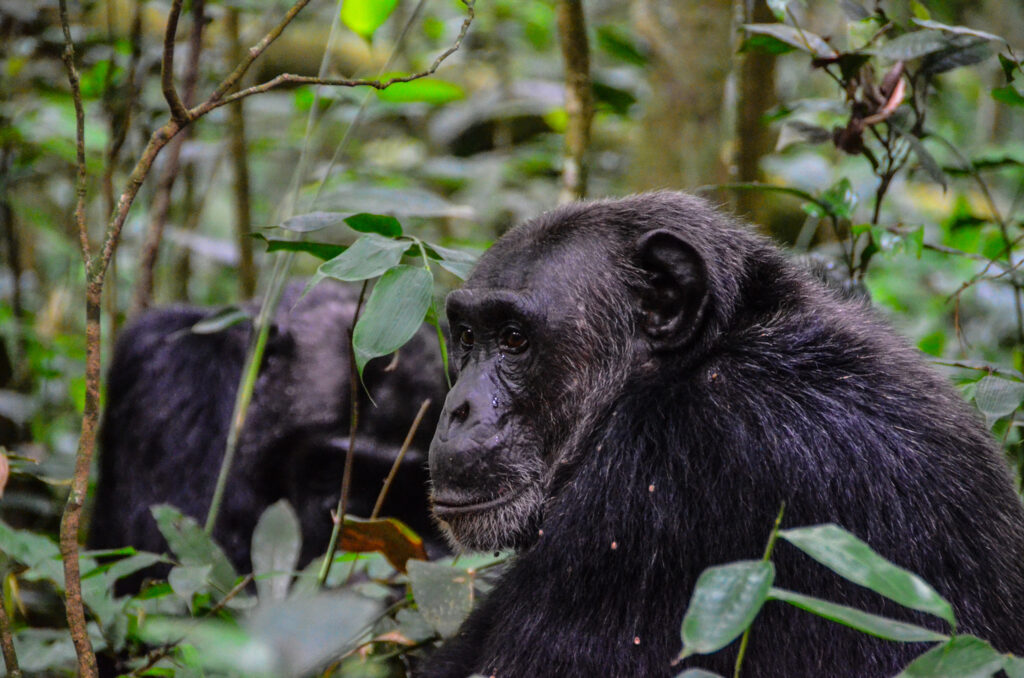
With 13 confirmed primate species, Kibale holds the highest primate diversity in Uganda and among the highest in the world. The park’s population of roughly 1,500 chimpanzees (Pan troglodytes) is its headline attraction — these are the same species as the chimpanzees studied by Dr. Jane Goodall at Gombe, and observing them in Kibale’s forest environment is among the most profound wildlife experiences available anywhere.
- Chimpanzee (Pan troglodytes): ~1,500 individuals; several habituated communities
- Red Colobus Monkey (Procolobus rufomitratus): one of Uganda’s most threatened primates
- Black-and-White Colobus (Colobus guereza): frequently seen leaping through the canopy
- L’Hoest’s Monkey (Allochrocebus lhoesti): ground-dwelling species endemic to Albertine Rift
- Blue Monkey (Cercopithecus mitis): common throughout the forest
- Red-tailed Monkey (Cercopithecus ascanius): easily identified by its white nose-patch and red tail
- Grey-cheeked Mangabey (Lophocebus albigena): large-bodied, noisy, and arboreal
- Uganda Mangabey (Lophocebus ugandae): recently recognized as a distinct species
- Olive Baboon (Papio anubis): often seen near the forest edge and camp areas
- Vervet Monkey (Chlorocebus pygerythrus): widespread; found at forest margins
- Potto (Perodicticus potto): slow-moving nocturnal primate; spotted on night walks
- Demidoff’s Galago (Galagoides demidovii): tiny nocturnal primate
- Thomas’s Galago (Sciurocheirus thomasi): slightly larger nocturnal galago
Other Mammals
Beyond primates, Kibale’s forest and savannah edges support a rich mammalian fauna. African forest elephant (Loxodonta cyclotis) herds move through the park, particularly in the southern sector near the Kibale–Queen Elizabeth corridor. African buffalo (Syncerus caffer), forest duikers, bushpigs, giant forest hogs, and spotted hyenas are regularly encountered. The park’s leopard population is present but rarely seen given the dense vegetation.
- African Forest Elephant — frequently heard, occasionally seen near waterholes
- African Buffalo — large herds in the grassland zones and forest margins
- Leopard — present but elusive; more commonly seen on night drives
- Spotted Hyena — active near the southern forest-savannah interface
- Bushpig and Giant Forest Hog — often seen at dawn and dusk
- Common Warthog — found in open grassy areas near the park boundary
- Forest Duiker species including Yellow-backed, Red, and Black-fronted Duiker
- Sitatunga — a semi-aquatic antelope; found in the papyrus swamp edges
- African Clawless Otter — spotted along rivers and streams
Birds
Kibale is a premier birding destination, with over 375 recorded species including 23 Albertine Rift endemics — species found nowhere else in the world outside this narrow highland corridor. The park is a mandatory stop on any serious Uganda birding itinerary.
- Great Blue Turaco (Corythaeola cristata): unmistakable, with vivid blue and yellow plumage
- African Pitta (Pitta angolensis): one of Uganda’s most sought-after species
- Green-breasted Pitta (Pitta reichenowi): Albertine Rift endemic; found in dense undergrowth
- Kibale Forest Robin (Stiphrornis xanthogaster): range-restricted Albertine endemic
- Nahan’s Partridge (Ptilopachus nahani): rare, ground-dwelling Albertine endemic
- African Broadbill (Smithornis capensis): displays with distinctive mechanical sound
- Crowned Eagle (Stephanoaetus coronatus): apex aerial predator of the forest
- Bar-tailed Trogon (Apaloderma vittatum): stunning rufous and green bird of the mid-canopy
- Collared Apalis (Oreolais ruwenzorii): Ruwenzori range endemic
- Blue-headed Sunbird (Cyanomitra alinae): common Albertine endemic
Activities in Kibale National Park
1. Chimpanzee Trekking
Chimpanzee trekking is the defining activity of Kibale National Park and one of the most extraordinary wildlife encounters in all of Africa. Treks depart from Kanyanchu Tourism Centre twice daily: a morning session beginning at 8:00 AM and an afternoon session beginning at 2:00 PM. Each group consists of a maximum of six tourists accompanied by an experienced UWA ranger-guide.
The trek itself can last anywhere from 30 minutes to 4 hours depending on where the habituated chimpanzee community has moved since the previous day. Rangers radio-track the chimps from early morning, so by the time your group enters the forest, the team has a reasonable idea of the community’s location. Once the chimps are located, your group has exactly one hour in their presence — a rule strictly enforced to minimize stress on the animals and reduce disease transmission risk.
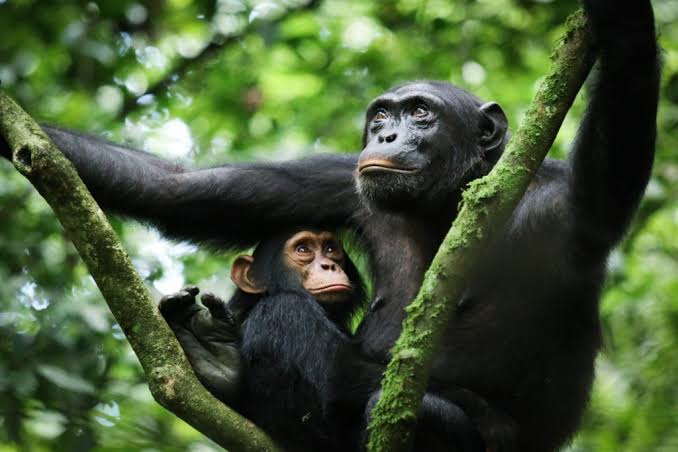
During that hour, you may observe chimpanzees feeding on figs or other forest fruits, grooming one another, playing, vocalizing with dramatic pant-hoots, travelling through the canopy, or resting on the forest floor. The experience is unscripted and entirely dependent on the chimps’ behavior that day — which is part of what makes it so compelling.
Practical tips: Book your permit well in advance through the Uganda Wildlife Authority or a licensed tour operator, particularly for the peak dry season months of June to September. Wear long trousers, long-sleeved shirt, and waterproof hiking boots. Bring a rain jacket, insect repellent, and snacks. The forest floor can be muddy and slippery; walking poles are allowed and recommended for less mobile visitors.
2. Chimpanzee Habituation Experience (CHASE)
For a deeper, more immersive encounter with chimpanzees, the Chimpanzee Habituation Experience (CHASE) allows participants to spend an entire day — from before dawn until late afternoon — with a chimpanzee community that is currently in the process of being habituated to human presence. Unlike standard trekking, there is no one-hour limit: you follow the chimps from their sleeping nests at first light through their morning feeding, travel, rest period, and afternoon activities.
The CHASE is a genuinely extraordinary experience — you witness the full daily behavioral repertoire of wild chimpanzees in a way that standard trekking cannot provide. Only four visitors per day are permitted to join the habituation team. Advance booking is essential. Participants must be physically fit and prepared for a demanding full-day walk of up to 10 kilometres or more.
3. Primate Walk at Kanyanchu
The Kanyanchu Primate Walk is a guided forest walk of 2 to 3 hours focused on spotting as many of Kibale’s primate species as possible in addition to chimpanzees. The walk is led by an expert UWA guide who specializes in primate tracking and identification. Expect close encounters with red colobus monkeys, black-and-white colobus, red-tailed monkeys, blue monkeys, grey-cheeked mangabeys, and L’Hoest’s monkeys, often in mixed-species groups that move through the canopy above the trail.
4. Bird Watching
Kibale ranks among Uganda’s top three birding destinations alongside Bwindi Impenetrable Forest and Queen Elizabeth National Park. Guided bird walks depart at dawn (around 6:30 AM) from Kanyanchu and cover prime forest interior and forest edge habitat. The Bigodi Wetland Sanctuary, located just outside the park boundary 7 kilometres from Kanyanchu, adds a wetland dimension that greatly increases species diversity, with papyrus-associated species such as Papyrus Gonolek and White-winged Warbler complementing the forest species inside the park.
Serious birders typically combine a minimum of 2 to 3 days in and around Kibale to do justice to the bird list. Early morning and late afternoon are peak activity periods. A skilled UWA birding guide can connect many of the cryptic understory species by their calls alone.
5. Bigodi Wetland Sanctuary Walk
The Bigodi Wetland Sanctuary is a community-managed conservation area administered by the Kibale Association for Rural and Environmental Development (KAFRED), located in Bigodi village approximately 7 kilometres from Kanyanchu along the Kamwenge Road. The 3-hour guided walk through the papyrus-fringed Magombe Swamp is an excellent complement to activities inside the park itself, offering a different habitat type, additional primate species, and a diverse wetland bird list.
Bigodi is not part of the national park and operates on a separate community fee structure, making it a more affordable option for budget travelers or those wishing to extend their wildlife exposure. The walk also provides meaningful economic benefit directly to the Bigodi community.
6. Nature Walks and Forest Hikes
UWA offers several guided nature walk options around Kanyanchu that do not specifically target chimpanzees but explore the forest ecosystem more broadly. These walks are excellent for plant identification, forest ecology interpretation, insect and reptile observation, and understanding the layered structure of a tropical rainforest. Specialist ethnobotanical walks focusing on the forest’s medicinal plants are available on request.
7. Night Walks
Guided night walks at Kanyanchu offer the chance to spot Kibale’s nocturnal residents — pottos, bush babies (galagos), African civet, genet cats, various owl species, and sleeping birds perched on low branches. Night walks depart at around 7:30 PM and last approximately 2 hours. Participants are equipped with powerful torches. The forest at night is an entirely different sensory experience — alive with the calls of frogs, insects, and distant primates.
8. Cultural Encounters
The area surrounding Kibale National Park is home to the Batooro people, the dominant ethnic group of the Tooro Kingdom with Fort Portal as their royal capital, as well as Bakiga communities who settled in the region more recently. Cultural village walks, traditional dance performances, craft workshops, and guided community visits can be arranged through the park’s cultural liaison programme or through local community tourism initiatives in Bigodi and other surrounding villages. These encounters add significant depth to the Kibale experience and directly support local livelihoods.
9. Crater Lakes Drive and Walk
The area around Fort Portal is famous for its dramatic volcanic crater lakes — over 50 of them, each with a different color, depth, and local ecosystem. Lakes Nkuruba, Nyinambuga, Nyamirima, Murambi, Lyantonde, and the twin lakes Saka and Kyegere are among the most beautiful and accessible. Many can be explored on foot along scenic rim trails with views of the Rwenzori Mountains on a clear day. A self-drive crater lakes loop from Fort Portal is an outstanding half-day excursion to combine with a Kibale visit.
Entry Fees and Permit Costs
All fees are set by the Uganda Wildlife Authority and are subject to revision. The figures below are current as of 2025. It is advisable to confirm current rates directly with UWA or a licensed Uganda tour operator before travel.
| Category | Foreign Non-Resident | Foreign Resident | East African Citizen |
| Park Entrance (Adult) | USD 40 | USD 30 | UGX 20,000 |
| Park Entrance (Child) | USD 20 | USD 15 | UGX 10,000 |
| Chimpanzee Trekking | USD 200 | USD 150 | UGX 150,000 |
| Chimpanzee Habituation | USD 250 | USD 200 | UGX 200,000 |
| Nature Walk / Bird Walk | USD 30 | USD 15 | UGX 10,000 |
| Primate Walk (Kanyanchu) | USD 30 | USD 20 | UGX 15,000 |
Note: Park entry fees are paid in addition to activity fees. Permits for chimpanzee trekking and habituation must be booked in advance as daily slots are limited. Children under 15 pay reduced park entry fees; children under 12 are not permitted to participate in chimpanzee trekking. Vehicle entry fees and camping fees apply separately.
Accommodation at and around Kibale National Park
Accommodation options around Kibale range from simple campsite bandas within the national park to luxurious private lodges set among the crater lakes north of Fort Portal. The majority of lodges and camps are located along the Fort Portal–Kamwenge Road between Fort Portal town and Kanyanchu Tourism Centre, allowing easy access to morning and afternoon activities.
Budget Accommodation
- Kanyanchu River Camp — UWA-operated campsite at the park headquarters; bandas and camping available; basic but conveniently located inside the park.
- Chimpanzee Forest Guesthouse — basic but clean guesthouse a few kilometres from Kanyanchu; popular with budget backpackers.
- Rwetera Safari Park — budget-friendly cottages with garden setting; suitable for self-drive travelers.
- Nyinabulitwa Country Resort — country cottages set near a crater lake; good value mid-budget option.
Mid-Range Accommodation
- Kibale Forest Camp — comfortable tented camp set in forest near Kanyanchu; excellent access to early morning activities; popular with birders.
- Isunga Lodge — mid-range lodge set on the Isunga hill with views toward the Rwenzoris; attractive gardens and reliable service.
- Turaco Treetops — charming elevated bandas with forest views; a favourite with photographers.
Luxury Accommodation
- Primate Lodge Kibale — UWA-partnered luxury lodge located inside the park perimeter; closest lodge to Kanyanchu; beautifully designed forest cottages; excellent dining.
- Kyaninga Lodge — exceptional luxury eco-lodge perched on the rim of Lake Kyaninga crater; stunning views; one of Uganda’s most awarded lodges.
- Ndali Lodge — elegant heritage lodge overlooking the Ndali-Kasenda crater lake cluster; exceptional cuisine, colonial atmosphere, beautiful gardens.
- Papaya Lake Lodge — intimate boutique lodge on a private crater lake; beautifully designed; ideal for a romantic or honeymoon safari.
- Kibale Lodge (Mantis Collection) — newest addition to the luxury market; modern architecture integrated into the forest landscape.
Best Time to Visit Kibale National Park
Dry Season: June–September (Primary)
The long dry season from June to the end of September is the most popular time to visit Kibale National Park. Trails are drier, forest tracks are navigable by most vehicle types, and chimpanzees tend to gather in larger groups around fruiting trees, making sightings more reliably rewarding. This is the peak safari season in Uganda generally, and it coincides with high demand for accommodation and permits — booking 3 to 6 months in advance for chimpanzee trekking permits is strongly advised during these months.
Dry Season: December–February (Secondary)
The short dry season offers excellent conditions similar to the main dry season and comes with marginally lower visitor numbers. This window is a good alternative for travelers who cannot travel mid-year. Chimpanzee permit availability tends to be better in January than in June or July. Migratory birds are also present in December and January, boosting Kibale’s already impressive bird list.
Wet Season: March–May and October–November
Uganda’s wet seasons are not the disaster for wildlife watching that the rains can be in some African destinations. Kibale’s resident wildlife — including the chimps — is present year-round, and the forest turns a vivid, lush green during the rains. However, the murram roads from Fort Portal to Kanyanchu become deeply rutted and muddy, restricting access to 4WD vehicles only. Permit availability is better, accommodation rates are often discounted, and some travelers find the wet forest atmosphere uniquely beautiful. If you visit in the wet season, book a 4WD vehicle without compromise.
Health and Safety
Yellow Fever: Uganda requires proof of yellow fever vaccination for entry. Carry your International Certificate of Vaccination (yellow card) at all times.
Malaria: Kibale sits at moderate elevation (1,100–1,590 m) where malaria risk is lower than coastal areas but remains present. Consult your doctor about appropriate antimalarial prophylaxis. Use insect repellent containing DEET and sleep under a mosquito net.
Chimpanzee Health Protocol: UWA enforces strict rules to protect chimpanzees from human-transmitted respiratory diseases. Maintain a minimum distance of 7 metres at all times. Visitors with cold, flu, or respiratory symptoms are not permitted to trek. Masks may be required as per current UWA guidelines.
Physical Fitness: Chimpanzee trekking involves walking on uneven, sometimes steep forest terrain for up to 4 hours. A moderate level of fitness is required. The CHASE experience demands high fitness. Inform your guide of any physical limitations before the trek begins.
Road Safety: Drive carefully on murram roads — reduce speed significantly on corrugated sections and in wet conditions. Night driving outside of towns is not recommended due to unlit roads, pedestrians, and livestock. Always carry a full spare tyre and a basic tool kit.
Sample Itinerary: Kibale National Park Self-Drive
3-Day Kibale Standalone
Day 1 — Kampala/Entebbe to Kibale: Depart Kampala by 6:00 AM. Drive via Mityana–Mubende–Kyenjojo–Fort Portal. Stop in Fort Portal for lunch and to explore the city centre and market. Fuel up. Continue 36 km south to your lodge near Kanyanchu. Afternoon crater lake walk or Bigodi Wetland Sanctuary visit. Dinner and overnight at lodge.
Day 2 — Chimpanzee Trekking and Primate Walk: Early breakfast and 7:30 AM briefing at Kanyanchu Tourism Centre. Morning chimpanzee trekking (3–4 hours in forest). Return to lodge for lunch. Afternoon primate walk (Kanyanchu Primate Walk) or bird watching session. Evening nature walk or night walk. Dinner and overnight.
Day 3 — Kibale to Next Destination: Optional early morning bird walk at Kibale Forest Camp or Bigodi Wetland. Depart after breakfast. Depending on onward itinerary: continue south 60 km to Queen Elizabeth National Park via Kamwenge, or return north to Fort Portal and continue to Murchison Falls or Bwindi Impenetrable Forest.
5-Day Kibale and Queen Elizabeth Circuit
- Day 1: Kampala to Kibale via Fort Portal. Afternoon Bigodi Wetland Sanctuary walk.
- Day 2: Morning chimpanzee trekking (CHASE for the ultimate experience). Afternoon crater lakes drive.
- Day 3: Kibale to Queen Elizabeth NP via Kamwenge (60 km, 1.5 hrs). Afternoon game drive in Kasenyi Plains.
- Day 4: Morning game drive. Launch cruise on Kazinga Channel. Afternoon tree-climbing lions search in Ishasha.
- Day 5: Return to Kampala/Entebbe via Mbarara (approx. 5–6 hours).
What to Pack for Kibale National Park
- Lightweight, breathable long-sleeved shirts and long trousers (neutral or earth tones; avoid bright colours)
- Waterproof hiking boots with good ankle support
- Rain jacket or poncho (essential year-round)
- Insect repellent (DEET-based)
- Sunscreen and sunglasses
- Small daypack for the trek
- 1–2 litres of water per trek session
- High-energy snacks (energy bars, trail mix)
- Camera with telephoto lens (minimum 300 mm recommended for wildlife)
- Binoculars (8×42 or 10×42 ideal for birding and wildlife)
- Walking poles (optional but useful for steep muddy terrain)
- Light fleece or warm layer (evenings can be cool at elevation)
- Hand sanitizer and face mask (required for primate trekking per UWA protocol)
- Torch/headlamp with spare batteries (for night walks and early starts)
- First aid kit with blister plasters, antiseptic, antihistamine, and diarrhoea medication
- Offline maps downloaded (Maps.me or Google Maps offline area for western Uganda)
Final Thoughts
Kibale National Park is one of the world’s truly irreplaceable natural wonders — a place where the forest itself seems to breathe with life, where the boundary between our world and the primate world dissolves, and where the calls of wild chimpanzees echo through ancient trees that have stood for centuries. For travelers seeking an authentic, immersive encounter with Africa’s remarkable biodiversity, Kibale belongs at the very top of the list.
Whether you arrive by chartered flight, guided tour, or your own rental vehicle on a self-drive adventure, the journey to Kibale is itself part of the experience — through the green rolling hills of western Uganda, past the improbable beauty of the crater lakes, into the embrace of one of Africa’s last great tropical forests. Plan carefully, book your permits early, choose the right vehicle for the road, and prepare to be changed by what you encounter in the forest.
Uganda’s pearl has many facets, but Kibale’s forest floor, seen through the eyes of a wild chimpanzee looking back at you, is surely the most brilliant.