
Lake Mburo National Park
Nestled in the rolling hills of western Uganda, Lake Mburo National Park is a compact yet remarkably diverse safari destination that often surprises visitors with the sheer richness of its wildlife and landscapes. Covering approximately 370 square kilometres in Kiruhura District, it is one of Uganda’s smallest savannah parks — but what it lacks in size, it more than compensates for in character and accessibility.
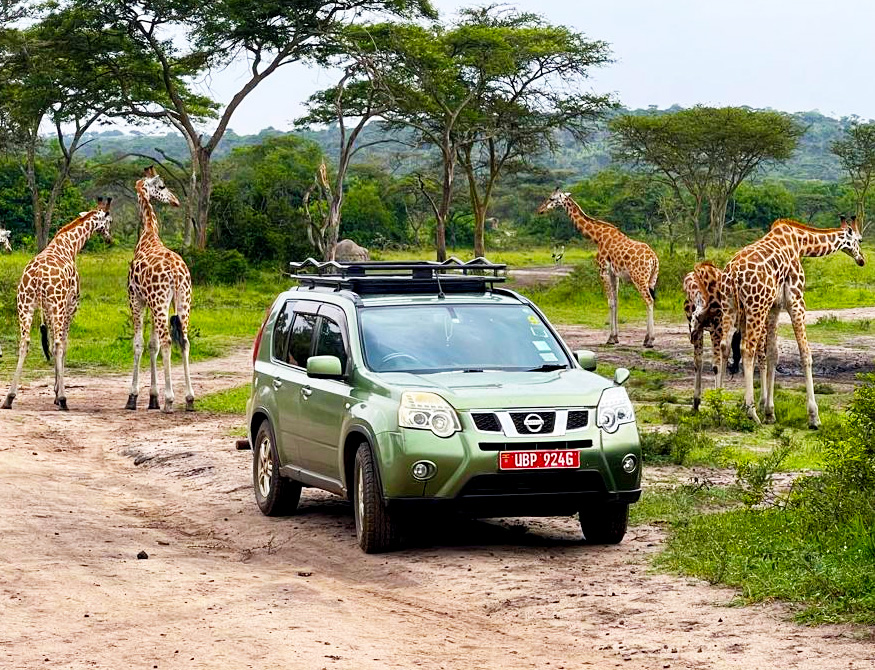
Unlike Uganda’s larger and more distant parks, Lake Mburo sits just 228 kilometres west of Kampala — a comfortable three-and-a-half to four-hour drive along a well-maintained tarmac road. This proximity makes it an ideal destination for a weekend getaway, a short safari break, or the first stop on a longer western Uganda circuit that might continue to Queen Elizabeth, Bwindi Impenetrable Forest, or Kibale National Park.
The park is bisected by the Kampala–Mbarara highway and is administered by the Uganda Wildlife Authority (UWA). Its landscape is a patchwork of open savannah grasslands, rocky outcrops, acacia woodlands, forested gorges, papyrus swamps, and five permanent lakes — all set within gently undulating hills that offer sweeping panoramic views. Wetlands cover approximately 20 percent of the park’s surface, making it an exceptional birdwatching destination as well as a haven for aquatic wildlife.
Lake Mburo is perhaps best known as the only national park in Uganda where you can see the rare Impala, and it holds the distinction of being one of very few parks in East Africa where Plains Zebra, Eland, Impala, and Klipspringer can all be found together. Add to this free-roaming giraffes, large hippo pods, Nile crocodiles, Topi antelopes, and over 315 recorded bird species — and it becomes clear why this park punches far above its weight.
History & Background
The land that today forms Lake Mburo National Park has a long history of human habitation and wildlife management. The area was first gazetted as a Controlled Hunting Area in 1933 during the British colonial era, recognising the need to protect its wildlife populations from unregulated hunting. In 1963, following Uganda’s independence, the area was upgraded to a Game Reserve, affording greater protection to its flora and fauna.
The park was formally gazetted as a National Park in 1983, but this came at a turbulent time in Uganda’s history. During the political instability of the 1970s and 1980s, the park suffered significant poaching and encroachment. Many large animals, including elephants and lions, were lost during this period — a loss that still defines the park’s wildlife profile today, as neither species maintains a permanent resident population within the park’s boundaries.
The re-gazettement of the park in 1983 also necessitated the resettlement of thousands of Banyankole pastoralists who had been living within its boundaries — a contentious process that created some community tensions that the Uganda Wildlife Authority has worked to address through benefit-sharing programmes. Today, 20 percent of all park entry fees are directed back into local community development projects, fostering a more collaborative relationship between the park and surrounding communities.
In recent decades, conservation efforts have focused on reintroducing wildlife and restoring the park’s ecological balance. Giraffes — absent for generations — were reintroduced and now thrive in the park’s acacia woodlands. The surrounding landscape is dominated by the Banyankole people, renowned for herding the iconic long-horned Ankole cattle, which can often be seen grazing on hillsides just beyond the park boundary.
Location & Geography
Lake Mburo National Park is located in Nyabushozi County, Kiruhura District, in the western region of Uganda. It lies at an altitude ranging from 1,220 metres to 1,828 metres above sea level, giving it a pleasantly temperate climate despite sitting just south of the equator.
The park’s geographic position is strategically convenient: it sits squarely along the Kampala–Mbarara highway (the main arterial road connecting Uganda’s capital to the southwest and Rwanda beyond), which makes it one of the most accessible national parks in Uganda. The park can be entered through two main gates: the Nshara Gate (accessible from the north, nearest to Kampala) and the Sanga Gate (the southern entry point, also known as the main gate), which serves as the primary access point to the Rwonyo headquarters and the lake shore.
The park’s landscape is defined by five permanent lakes — Lake Mburo, Lake Kazuma, Lake Kigambira, Lake Bwondha, and Lake Mburo — along with seasonal swamps and wetlands, particularly around the Warukiri and Miriti swamps. Rocky outcrops and ridges punctuate the terrain, offering elevated viewpoints over the park and its lakes. The western shores of the main Lake Mburo feature particularly dramatic scenery, with forested gorges, papyrus swamp edges, and rocky ridgelines.
Wildlife & Biodiversity
Mammals
Lake Mburo National Park harbours over 68 mammal species, an impressive tally for a park of its size. Its most distinctive feature is the combination of species found together — particularly Plains Zebra, Eland, Impala, and Klipspringer — a grouping not found in any other Ugandan national park. This unique assemblage reflects the park’s transitional ecological position between the savannah grasslands of East Africa and the more densely forested landscapes of central and western Uganda.
- Plains Zebra (Equus quagga) — Lake Mburo holds the largest population of zebras in Uganda. They roam the open grasslands in family groups, often alongside other grazers, and are a highly photogenic subject on game drives.
- Impala (Aepyceros melampus) — Lake Mburo is the only Ugandan park where Impalas are found, making it the go-to destination for anyone wanting to see this graceful antelope. Large herds can be seen throughout the park.
- African Buffalo (Syncerus caffer) — Buffaloes are common and can be encountered throughout the park, including around water points and in the more open grassland areas.
- Common Hippopotamus (Hippopotamus amphibius) — Large pods of hippos inhabit the lakes and are a highlight of the boat cruise experience. They can also sometimes be seen grazing on the lake shores at dawn and dusk.
- Nile Crocodile (Crocodylus niloticus) — Crocodiles are common along the lake shores and can be spotted on boat cruises and during nature walks near the water.
- Topi (Damaliscus lunatus) — This striking antelope, with its distinctive reddish-brown coat and blue-grey patches on the legs, is well represented in the park.
- Common Eland (Taurotragus oryx) — Africa’s largest antelope roams the park in small herds, often seen on the open grasslands and woodland edges.
- Waterbuck (Kobus ellipsiprymnus) — Waterbuck are frequently spotted near the lake shores and in areas with access to water.
- Bushbuck (Tragelaphus scriptus) — More secretive than other antelopes, bushbuck favour dense bush and forest margins.
- Warthog (Phacochoerus africanus) — Warthog are common throughout the park and are often seen trotting across open grasslands, tails raised comically skyward.
- Klipspringer (Oreotragus oreotragus) — These small, sure-footed antelopes inhabit the rocky outcrops and ridges of the park.
- Oribi (Ourebia ourebi) — This small and endangered antelope can be found in grassland areas of the park.
- Leopard (Panthera pardus) — Leopards are present but secretive; they are most likely to be seen on night game drives.
- African Civet (Civettictis civetta) & Serval (Leptailurus serval) — Both are more commonly sighted on night drives.
- Spotted Hyena (Crocuta crocuta) — Present in the park; most active at night.
- Olive Baboon (Papio anubis) & Vervet Monkey (Chlorocebus pygerythrus) — Common primates found throughout the park.
- Lesser Bushbaby (Galago senegalensis) — Visible on night drives, their reflective eyes catching torch beams in the dark.
- Potto (Perodicticus potto) — Another nocturnal primate occasionally spotted on guided night drives.
Note: Lake Mburo does not have permanent resident populations of elephants or lions, though occasional transient lions may pass through. This actually makes the park a safer option for walking safaris and horseback riding.
Birdlife
Lake Mburo National Park is an outstanding birdwatching destination, with over 315 recorded species spanning a wide range of habitats including acacia woodland, open savannah, papyrus swamp, lakeshore, and mixed forest. The park’s diversity of habitats in a compact area means that birders can encounter species from several different ecological zones within a single day.
Notable species include:
- African Fish Eagle (Haliaeetus vocifer) — Iconic and ever-present along the lakeshore, its haunting call is synonymous with African wilderness.
- Shoebill Stork (Balaeniceps rex) — Though not guaranteed, this prehistoric-looking bird has been recorded in the papyrus swamp areas.
- Saddle-billed Stork (Ephippiorhynchus senegalensis) — A striking bird frequently seen wading along the lake margins.
- Abyssinian Ground Hornbill (Bucorvus abyssinicus) — One of Africa’s most dramatic birds, often seen striding across open grassland.
- Lilac-breasted Roller (Coracias caudatus) — A brilliantly coloured and commonly sighted species.
- Nubian Woodpecker (Campethera nubica) — Found in acacia woodland areas.
- Red-faced Barbet (Lybius rubrifacies) — An endemic of the region around Lake Victoria basin.
- Papyrus Gonolek (Laniarius mufumbiri) — A papyrus specialist found in swamp edges.
- African Jacana (Actophilornis africanus) — Common on the lake surface, walking across floating vegetation.
- Grey Crowned Crane (Balearica regulorum) — Uganda’s national bird, seen in grassland and wetland areas.
- Black-and-white Casqued Hornbill — Recorded in forest patches.
- Marabou Stork, Sacred Ibis, Yellow-billed Stork — Regularly seen around water.
The best birding spots include the Warukiri and Miriti swamps (excellent for papyrus specialists and water birds), the Rwonyo area (rich in acacia-associated species), and the lake shore during the morning boat cruise (where kingfishers, herons, and raptors are frequently encountered).
Safari Activities
1. Game Drives
Game drives are the cornerstone of any Lake Mburo safari experience. The park’s open grasslands and well-maintained track network make for excellent wildlife viewing, particularly during the morning hours (departing at dawn) and late afternoon (from about 3:30 pm), when animals are most active and the light is ideal for photography.
Night game drives are a popular and rewarding option, revealing a different world of nocturnal creatures. Leopards, spotted hyenas, civets, servals, genets, bushbabies, and pottos are among the species that may be encountered after dark. Night drives depart from Rwonyo Camp with a UWA ranger guide.
2. Boat Cruises on Lake Mburo
A boat cruise on the lake is one of the most distinctive and memorable experiences at Lake Mburo — and one that sets it apart from most other Ugandan parks. Guided boat trips depart from the Rwonyo jetty and typically run in the morning, mid-morning, and at 2:00 pm (with evening departures also sometimes available). Trips last approximately two to three hours.
On the water, visitors get remarkably close to hippos and crocodiles in a way that is simply not possible on land. Waterbucks, buffaloes, and other animals are often seen drinking at the lake edge. Birdlife along the shore is exceptional, with kingfishers, herons, storks, fish eagles, and many waterbirds providing continuous entertainment. Boat cruises must be booked in advance through UWA or your accommodation.
3. Guided Nature Walks
Guided nature walks at Lake Mburo offer an intimate, on-foot experience of the bush that game drives cannot replicate. Because the park has no permanently resident elephants or lions, walking is considered relatively safe — though a UWA armed ranger always accompanies groups. Walks typically last two to three hours.
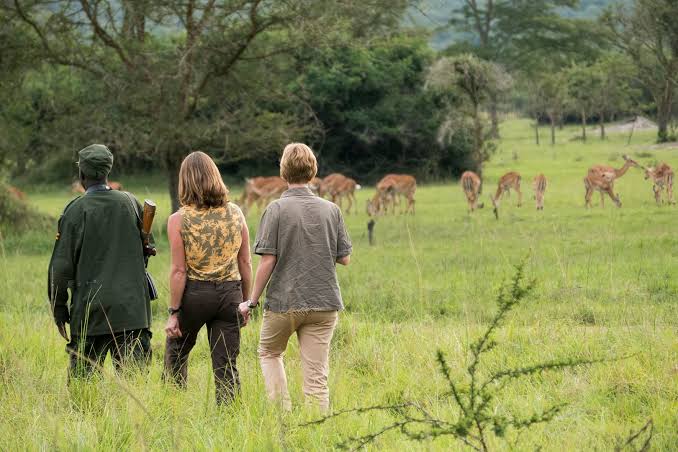
Popular routes include a trail leading to a natural salt lick, where zebras, buffaloes, antelopes, and even hippos sometimes congregate. Another route leads to Kazuma Hill, one of the highest points in the park, offering panoramic views across the lakes and surrounding savannah. The Miriti swamp lowland trail is especially good for birding.
4. Horseback Riding Safaris
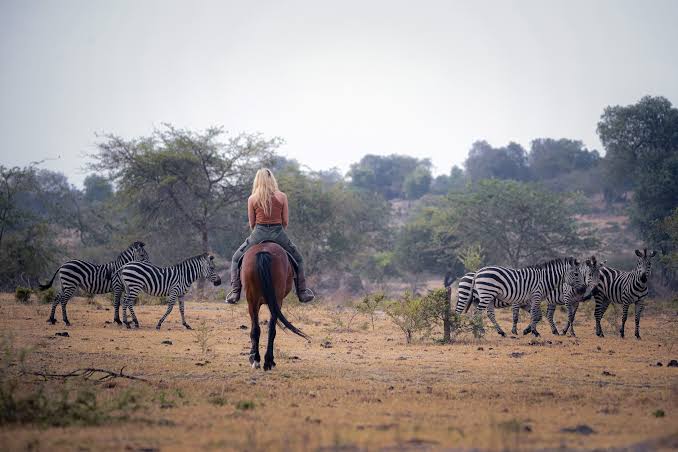
Lake Mburo is unique among Uganda’s national parks in offering horseback riding safaris — a thrilling way to traverse the savannah and get surprisingly close to wildlife, as animals tend to be less alarmed by the presence of horses than by vehicles. Horses are managed by a private operator based at the park, and rides can range from one to four hours in duration, with rates varying accordingly.
Riders have reported getting within metres of zebras, giraffes, buffaloes, and topis — an experience that is genuinely extraordinary for wildlife enthusiasts and photographers alike. No prior riding experience is required for shorter rides, though confidence in the saddle is recommended for the longer options. Bookings should be made in advance.
5. Sport Fishing
Fishing is permitted in designated lakes within the park, most notably Lake Mazinga, which is conveniently free of both hippos and crocodiles. Species targeted include Nile tilapia, haplochromes, mudfish, and lungfish. Fishing licences are obtained from UWA at the park gate or headquarters. This activity appeals both to dedicated anglers and to those looking for a relaxing afternoon activity between game drives.
6. Birdwatching
Dedicated birdwatching tours can be arranged either independently or with a specialist guide. The park’s varied habitats reward dedicated birders with an impressive species list, and experienced birding guides (available through some lodges and tour operators) know the best spots for particular species at different times of day and season.
7. Igongo Cultural Centre
Located approximately 4 kilometres from the Sanga Gate, the Igongo Cultural Centre is a fascinating complement to any Lake Mburo safari. The centre showcases the history and culture of the Banyakitara tribes — the Banyankole, Bakiga, Banyoro, and Batooro — through a small but well-curated museum, traditional grass-thatched huts, local crafts, and regional cuisine. It is an excellent stop for context on the cultural landscape surrounding the park.
Best Time to Visit
Lake Mburo National Park can be visited year-round, and each season offers different wildlife experiences. Understanding the seasonal patterns helps visitors plan their trip to align with their priorities.
Dry Season (June–August & December–February) — Best for Game Drives
The dry seasons are generally considered the best time for game drives, as animals congregate around the permanent lakes and water sources, making them easier to locate. Vegetation is also shorter, improving visibility. Roads within the park are at their most reliable condition during these months. Temperatures are pleasant — warm during the day but comfortably cool in the evenings.
Wet Season (March–May & September–November) — Good for Birding
The wet seasons bring lush green vegetation that transforms the park’s landscapes, and wildlife disperses more widely as water is available throughout. While game drives can be more challenging on muddy tracks, birdwatching is superb during these months as migratory species arrive and resident birds are in breeding plumage. The park is also less crowded during the rains, offering a more exclusive experience.
Boat cruises on the lake are rewarding year-round. Horseback riding and nature walks are best enjoyed during the drier months when trails are less slippery.
Park Entry Fees & Charges
All fees are paid to the Uganda Wildlife Authority (UWA). It is advisable to check the UWA website (ugandawildlife.org) or contact them directly for the most current tariff, as fees are subject to change.
- Foreign Non-Residents: USD 40 per person per day
- Foreign Residents: USD 30 per person per day
- East African Citizens: UGX 20,000 per person per day
- Children (5–15 years): Reduced rates apply — confirm with UWA
- Children under 5: Free entry
- Vehicle entry fees: Applicable for self-drive vehicles
- Activity fees: Additional charges apply for boat cruises, game drives, nature walks, and horseback riding — confirm with UWA or your lodge at the time of booking
- 20% of entry fees are channelled into local community development projects
Accommodation Options
Lake Mburo offers a range of accommodation from luxury lodges to budget-friendly options, catering to travellers across all budgets. Most properties are situated in and around the park, offering easy access to game drives and other activities.
Luxury & Mid-Range
- Mihingo Lodge — A stunning lodge perched on a rocky hill within the park, with luxurious tented rooms offering panoramic views over a private waterhole. Known for its swimming pool, superb service, and excellent food.
- Rwakobo Rock Lodge — A beautifully designed boutique lodge set atop rocky outcrops within the park, with infinity views and stylish accommodation that blends seamlessly with the landscape.
- Mantana Tented Camp — An elegant tented camp offering a classic safari feel within the park boundary.
- Lake Mburo Safari Lodge (Kigambira Safari Lodge) — Comfortable lodge accommodation offering game drive packages and boat cruises.
- Eagle’s Nest Lodge — A scenic lodge set on elevated ground with views over the park.
Budget Options
- Rwonyo Rest Camp (UWA-managed) — The official Uganda Wildlife Authority camp located at the park headquarters on the lake shore. Offers basic bandas, camping, and self-catering facilities. Ideal for budget travellers and self-drive visitors.
- Arcadia Cottages — Comfortable self-catering cottages near the park at a reasonable price point.
- Leopard Rest Camp — A budget-friendly option near the park.
- Hyena Hill Lodge — Basic but comfortable accommodation near the park.
For self-drive visitors on a budget, Mbarara city (approximately 30 kilometres from the park) offers a wide range of hotels and guesthouses at various price points, from which day trips to the park are very manageable.
Car Rental & Self-Drive Guide
Getting to Lake Mburo National Park by Road
Why Self-Drive to Lake Mburo?
Lake Mburo National Park is one of the most self-drive-friendly national parks in Uganda — and in East Africa more broadly. Its proximity to Kampala, its location directly on the main tarmac highway to the southwest, and the well-maintained internal road network within the park all combine to make it an excellent choice for self-drive safari travellers.
Unlike some of Uganda’s more remote parks — where long distances on rough roads, challenging navigation, and uncertain conditions make a guided tour almost essential — Lake Mburo is accessible enough that experienced self-drive travelers can navigate it comfortably. It is also an ideal first park for those new to self-drive safaris in Uganda, before potentially continuing to more challenging destinations.
Self-driving gives you freedom: the ability to set your own schedule, linger at wildlife sightings, depart at sunrise, and explore at your own pace. It is also typically more cost-effective than a fully guided tour for small groups or independent travelers.
Getting There: Distance & Route
From Kampala
- Distance: Approximately 228–240 kilometres
- Estimated driving time: 3.5 to 4.5 hours (depending on traffic through Kampala and Masaka)
- Route: Kampala → Masaka → Mbarara highway (paved, in generally good condition)
- The park gates are located approximately 15 kilometres off the main Mbarara highway, with the Nshara and Sanga gates both clearly signposted
From Entebbe International Airport
- Distance: Approximately 240–250 kilometres
- Estimated driving time: 4 to 5 hours
- Route: Entebbe → Kampala → Masaka → Mbarara highway
- Many car rental companies offer airport pick-up at Entebbe, making this a seamless option for fly-in travellers
From Mbarara City
- Distance: Approximately 30 kilometres
- Estimated driving time: 30 to 45 minutes
- Mbarara is the nearest major town to the park and an excellent base if staying outside the park boundaries
- Car hire services are also available in Mbarara for those flying into or busing to the town
From Kigali, Rwanda
- Distance: Approximately 300–320 kilometres
- Estimated driving time: 4 to 5 hours
- Route: Kigali → Katuna/Gatuna border → Kabale → Mbarara → Lake Mburo
- Lake Mburo is a natural stopover for travellers combining Uganda and Rwanda in one itinerary
Recommended Rental Vehicles
Choosing the right vehicle is critical for a comfortable and safe self-drive safari. While the main road to Lake Mburo is tarmac, the internal park tracks — especially those in the more remote western sections — can become muddy and challenging during and after rains. A 4×4 vehicle is therefore strongly recommended for driving inside the park.
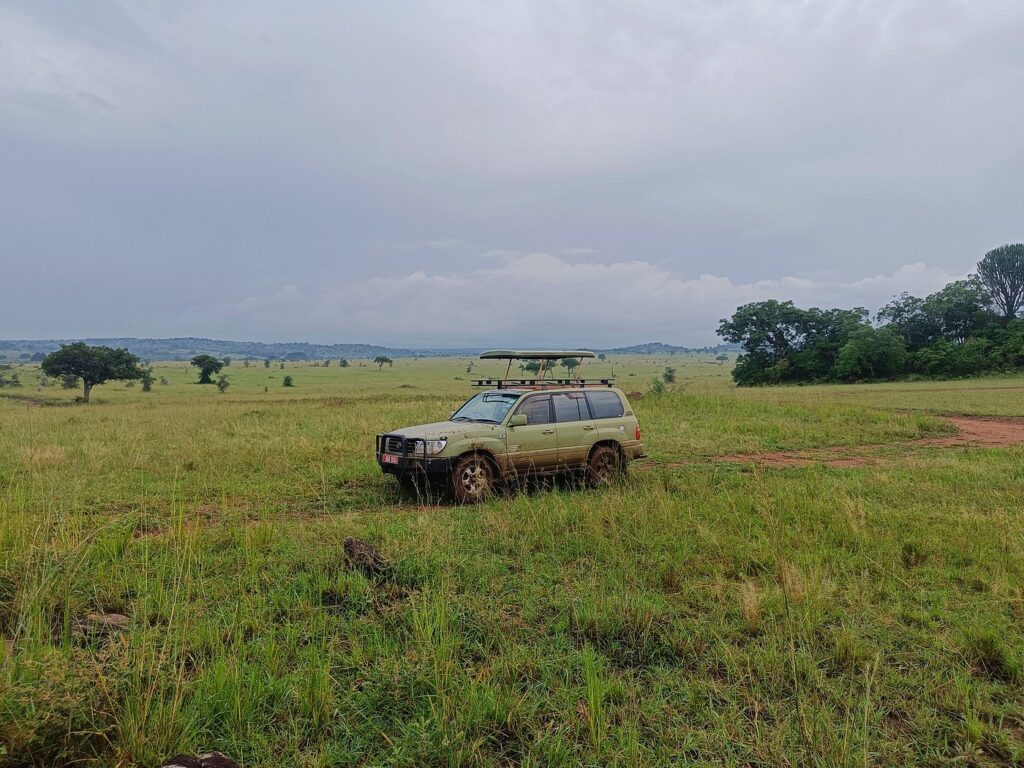
Toyota Land Cruiser (4×4) — Most Recommended
The Toyota Land Cruiser — particularly the 76 Series (Land Cruiser GX or VX) or the 78 Series — is the gold standard for Ugandan safaris. With high ground clearance, genuine 4×4 capability, and a robust, proven drivetrain, the Land Cruiser handles the full range of conditions encountered in Uganda’s national parks. Diesel variants (the 4.2-litre or 4.5-litre engines) offer better fuel economy and torque for loaded off-road driving.
Pop-up roof options are available on some rental Land Cruisers, transforming the vehicle into an excellent game-viewing platform. This is particularly useful at Lake Mburo where wildlife — especially zebras, giraffes, and antelopes — can often be observed at close range on the open grasslands.
Toyota Land Cruiser Prado (4×4)
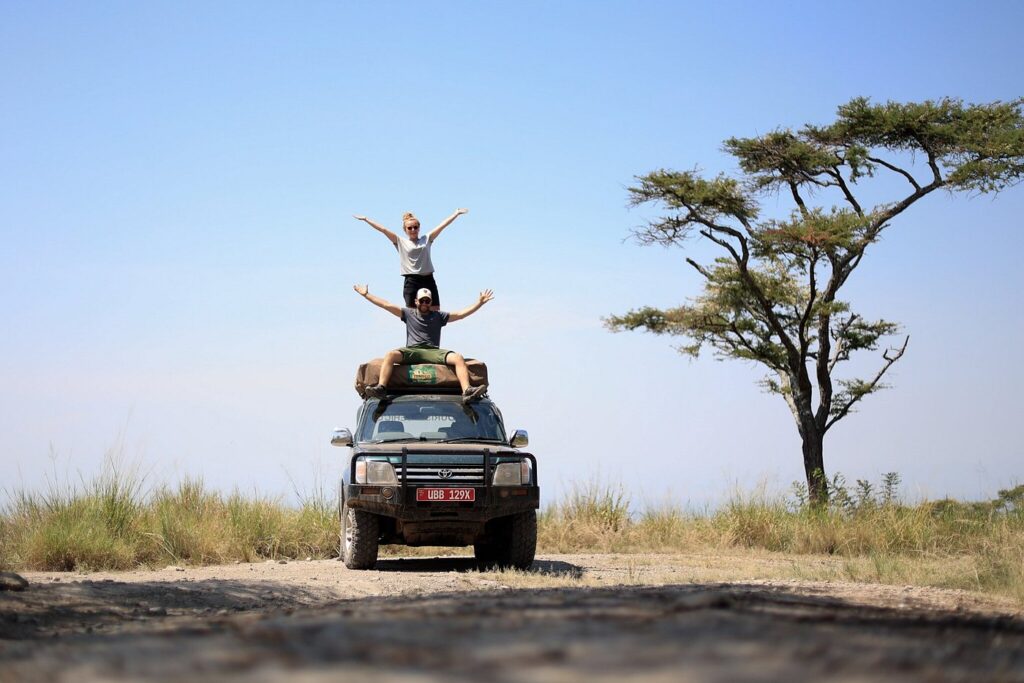
The Land Cruiser Prado (120 or 150 Series) is a popular and comfortable choice for Lake Mburo, offering more passenger comfort than the utilitarian Land Cruiser while still providing genuine 4×4 capability. Its higher driving position is excellent for game viewing. The Prado is a good option for small families or groups of two to four people.
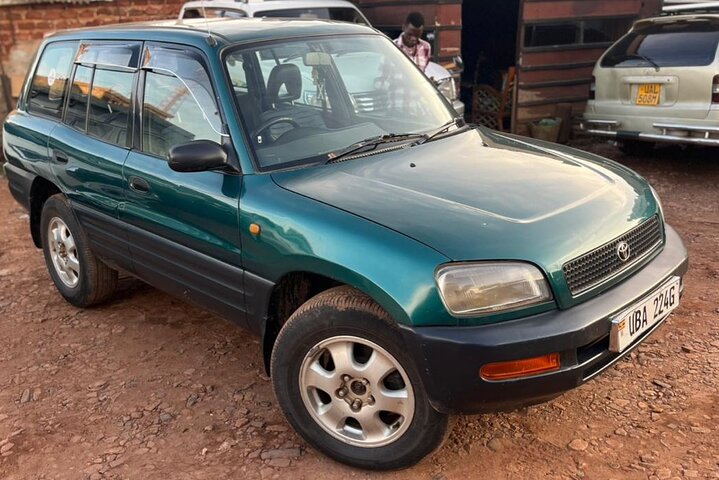
Toyota RAV4 (4×4)
For the main highway drive and drier conditions within the park, a Toyota RAV4 with 4×4 or AWD capability is a viable and more economical option. It is comfortable on tarmac and handles moderate tracks well. However, during the rainy season or for exploring the more challenging western areas of the park, a more capable 4×4 is preferable.
Nissan Patrol (4×4)
The Nissan Patrol (Y61 or Y60 Series) is another capable and commonly available 4×4 in Uganda’s car hire fleet. It offers similar off-road credentials to the Land Cruiser, with a robust diesel engine and good ground clearance. Some rental operators have Patrol variants configured with roof racks and camping equipment for extended self-drive adventures.
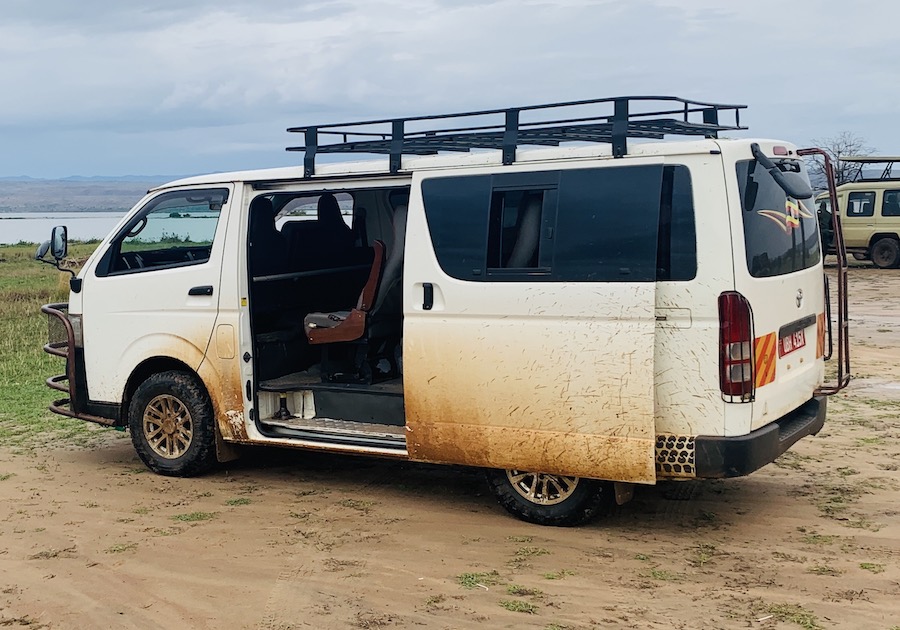
Safari Van (7–9 Seater)
For larger groups, a customised 4×4 safari van or minibus with a pop-up roof is an excellent option. These vehicles carry more passengers while still providing an elevated game-viewing platform and reasonable off-road capability. They are commonly used by tour operators and can also be rented for self-drive use.
Car Rental Tips & Requirements
Booking Your Rental Car
- Book well in advance, especially during peak season (June–August and December–January), as quality 4×4 vehicles in Uganda are in high demand.
- Compare quotes from multiple reputable car hire companies. Established operators in Uganda include 4×4 Uganda, Best Car Hire Uganda, Uganda Self Drives, and others.
- Confirm whether the quoted rate includes unlimited mileage, insurance (CDW/LDW), 24-hour roadside assistance, and a spare tyre.
- Ask specifically about the vehicle’s condition, service history, and whether a full-size spare is included — not just a space-saver.
- Request a pop-up roof vehicle if one is available — it greatly enhances game viewing at Lake Mburo.
- Confirm pick-up and drop-off locations: most operators can deliver to Kampala city, Entebbe Airport, or other agreed points.
- Arrange for the hire to include Nairobi or Kigali drop-off if you are doing a cross-border circuit.
Driving Requirements
- A valid driving licence from your home country is accepted, along with an International Driving Permit (IDP) — it is recommended to carry both.
- Uganda drives on the LEFT side of the road.
- The minimum rental age is typically 23–25 years, depending on the operator.
- A deposit (credit card or cash) is usually required at the time of vehicle collection.
- Ensure the vehicle has comprehensive insurance coverage and confirm any excess liability before driving.
- Carry a copy of the rental agreement and vehicle insurance documents at all times in Uganda.
Road Conditions
- The Kampala–Masaka–Mbarara highway is tarmac and in generally good condition, with periodic sections under repair — allow extra time for these.
- The road to the park gates from the main highway is mostly tarmac or well-graded murram (laterite gravel), passable in most vehicles.
- Internal park tracks are well-maintained in dry conditions but can become challenging with deep mud after heavy rainfall.
- A high-clearance 4×4 is essential for exploring the full park track network, particularly the western areas.
- Fill up with fuel in Mbarara before entering the park — there are no fuel stations within the park.
- Carry a reserve fuel supply (jerry can) if you plan extended driving within the park.
- GPS or offline maps (Maps.Me or Google Maps offline) are useful but may not show all internal park tracks accurately — a UWA park map available at the gate is recommended.
- Speed bumps (sleeping policemen) are very common on Ugandan roads, including in towns along the route — drive carefully through settlements.
Self-Drive Safety Tips
- Never drive at night on Ugandan roads — this is a cardinal rule. Pedestrians, cyclists, livestock, and unlit vehicles on the road at night create serious hazards.
- Plan to depart Kampala early (by 6:00–6:30 am) to clear the city before peak traffic and arrive at the park in time for a midday game drive.
- Within the park, follow all UWA regulations — remain in your vehicle during game drives unless at designated walking areas.
- Do not approach wildlife too closely and never leave your vehicle near hippos, buffaloes, or other dangerous animals.
- Keep vehicle speeds low on park tracks (maximum 40 km/h) to protect wildlife and the road surface.
- Always inform your accommodation of your planned movements each day.
- Carry a charged mobile phone — network coverage is reasonable near the main Mbarara highway and near the park headquarters.
- Carry an emergency kit: first aid supplies, a torch (flashlight), water, and snacks.
Sample Self-Drive Itinerary: 2 Days / 2 Nights
Day 1: Kampala / Entebbe → Lake Mburo National Park
- Depart Kampala or Entebbe early (6:00–6:30 am) to beat city traffic.
- Drive southwest on the Masaka–Mbarara highway (approximately 3.5–4 hours).
- Stop at a roadside market along the way for fresh fruit and local snacks.
- Enter through Nshara or Sanga Gate; pay park entry fees at the gate.
- Check into your accommodation and have lunch.
- Afternoon game drive (departing approximately 3:30–4:00 pm) through the open savannah to look for zebras, impalas, giraffes, and buffaloes.
- Evening sundowner at your lodge or camp and overnight stay.
Day 2: Lake Mburo National Park
- Early morning game drive departing at sunrise (approximately 6:30 am) — the best time for wildlife activity and photography.
- Return for breakfast.
- Morning boat cruise on Lake Mburo (departing approximately 8:00–9:00 am) — look for hippos, crocodiles, waterbucks, and lakeshore birds.
- Optional: guided nature walk to the salt lick or Kazuma Hill viewpoint in the mid-morning.
- Lunch at your accommodation or camp.
- Optional afternoon activities: horseback riding, birdwatching, or a visit to the Igongo Cultural Centre.
- Night game drive (optional, with UWA ranger) — look for leopards, civets, genets, and bushbabies.
- Overnight at the park.
Day 3: Lake Mburo → Kampala / Continue to Next Destination
- Final early morning game drive.
- Breakfast and check-out.
- Drive back to Kampala (approximately 3.5–4 hours) OR continue westward to Queen Elizabeth National Park (approximately 2–3 hours further) or Bwindi Impenetrable Forest.
Practical Information
Health & Safety
- Malaria is present in Uganda — take appropriate prophylaxis and use insect repellent and long-sleeved clothing in the evenings.
- Yellow Fever vaccination is mandatory for entry into Uganda — carry your certificate.
- Drink only bottled or treated water.
- The nearest major hospital is in Mbarara — ensure you have comprehensive travel insurance with medical evacuation coverage.
- Sun protection (hat, sunscreen, sunglasses) is essential, particularly during outdoor activities.
Currency & Payments
- Uganda’s currency is the Ugandan Shilling (UGX). USD is widely accepted at lodges and park gates.
- ATMs are available in Mbarara — withdraw sufficient local currency before entering the park.
- Most lodges accept credit cards, but it is wise to carry cash for smaller expenses and tips.
- Tips for rangers, guides, and lodge staff are appreciated and form an important part of their income.
Connectivity
- Mobile network coverage (MTN Uganda, Airtel) is available near the main highway and around the park headquarters at Rwonyo.
- Coverage may be limited in some internal areas of the park.
- Most lodges offer Wi-Fi, though speeds may be limited.
- Download offline maps and park information before departing Kampala.
What to Pack
- Neutral-coloured safari clothing (khaki, olive, beige) — avoid bright colours that may disturb wildlife.
- Warm fleece or light jacket for early morning game drives.
- Quality binoculars — essential for birdwatching and wildlife spotting.
- Camera with a telephoto lens (200mm+ recommended).
- Comfortable walking shoes or boots for nature walks.
- Hat, sunscreen, and sunglasses.
- Insect repellent.
- Reusable water bottle.
- Small daypack for walks and excursions.
Conclusion
Lake Mburo National Park is one of Uganda’s most rewarding and accessible wildlife destinations — a park that consistently surprises and delights visitors who arrive expecting something modest and leave marvelling at how much it delivers. Its combination of classic savannah wildlife, spectacular birdlife, intimate boat cruises, and unique activities like horseback riding gives it a character that is entirely its own.
For self-drive travellers in particular, Lake Mburo represents an ideal introduction to Ugandan safari driving — close enough to Kampala for a weekend escape, forgiving enough for less experienced off-road drivers, and rewarding enough to satisfy the most experienced safari veterans. With a well-chosen 4×4 rental vehicle, good preparation, and an early morning departure, the journey from Kampala to the shores of Lake Mburo can be one of the most memorable drives in East Africa.
Whether you come for a weekend break, as a first stop on a longer Uganda safari circuit, or specifically to tick off the Impala, ride horses in the savannah, or watch the sun rise over a lake alive with hippos — Lake Mburo National Park will not disappoint.